The approval mark is the whole test
Every "can I bring our car seat to Europe" thread ends the same way: somebody flew with theirs, nobody said a word, it was fine. Probably true, and beside the point. Nobody inspects a car seat at an airport. The check, on the rare occasion it happens at all, happens at a roadside stop in a rented hatchback, and what gets inspected is a sticker on the side of the shell.
| Where you are driving | What the label must show | Restraint required until | Taxi carve-out |
|---|---|---|---|
| United Kingdom | Capital E in a circle, plus R129 (height-based seats) or ECE R44 (weight-based seats) | 12 years old or 135 cm, whichever comes first | Yes, written into the law |
| Ireland | The E mark; R129 is now the only standard sold new in the EU | 150 cm tall or 36 kg, whichever comes first | Yes, taxis are excluded from the rule |
| Canada | The National Safety Mark | Set by each province and territory | Not addressed in the federal guidance |
| United States | Certification to FMVSS 213 (FMVSS 213b for seats built from 5 December 2026) | Set by state law | Set by state law |
Your American car seat is legal in exactly one country
The US federal standard, 49 CFR 571.213, specifies requirements for child restraint systems used in motor vehicles and aircraft. It is a serious standard with a serious test programme behind it. It is simply not the standard the UK or Ireland recognises, and a seat certified to it does not carry a circled E, because the circled E is a United Nations type-approval mark that an American manufacturer has no reason to apply for.
That produces the awkward situation almost no family-travel guide states plainly:
- What your seat's label says: it conforms to the applicable US federal motor vehicle safety standards, with height and weight limits in pounds and inches.
- What UK and Irish law ask the label to say: a capital E in a circle, with R129 or ECE R44 next to it.
- What that means in practice: the seat is not an approved child restraint where you are driving, however well built it is and however unlikely anyone is to look.
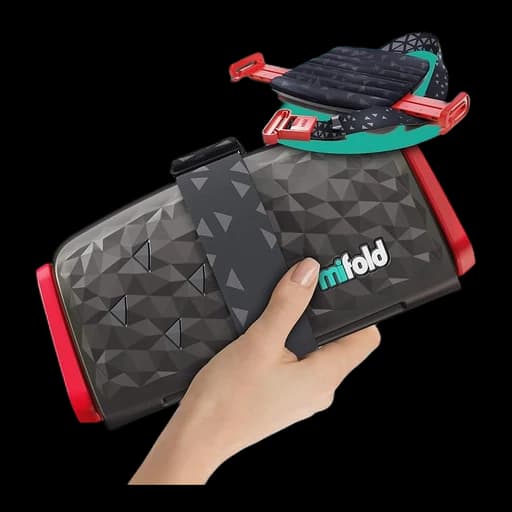
Ireland sets its threshold higher than Britain does: under 150 cm or 36 kg rather than 135 cm or 12 years. A ten-year-old who has graduated out of a booster at home can be back in one for a week in Kerry. If that is your child, a packable travel booster is the least painful fix.
The taxi carve-out is the loophole nobody plans around
Both countries write an exception for hired vehicles, and the exception is far broader than American parents expect. In Britain, if the driver does not provide the correct child car seat, children may travel without one — on a rear seat, wearing an adult belt if they are three or older, and with no belt at all if they are under three. Ireland's requirement applies to cars and goods vehicles "other than a taxi" at all.
Two more details in the same GOV.UK guidance that catch people out: minibus and coach operators are not required to provide child car seats at all, so an airport transfer van is on you; and a child aged three or over may sit in a back seat with no restraint if the vehicle has none fitted.
Bring, rent, or skip the car: four answers, three tests
Run every option through the same three questions rather than arguing about which is cheapest. The cheapest option is worthless if it is not legal where you are driving, and the legal one is worthless if it will not fit the car that actually turns up.
| Option | Legal where you are going | Fits the car you actually get | Where it fails |
|---|---|---|---|
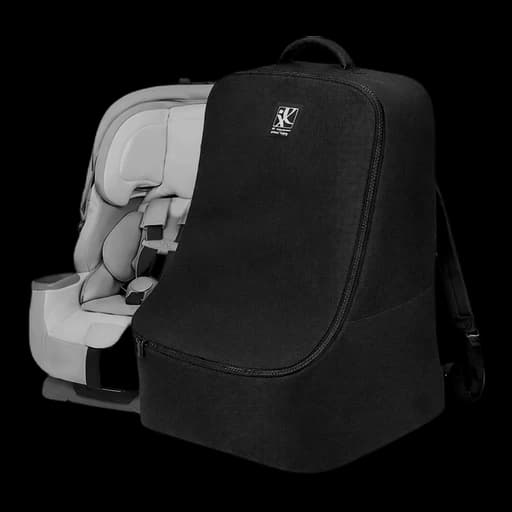
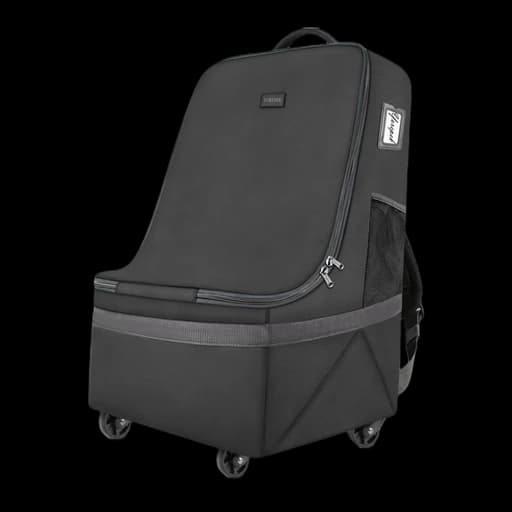
| Bring your own seat | No in the UK and Ireland; unmarked elsewhere in Europe | You know the seat, but not the belt geometry or anchor spacing of a car you have never seen | It is damaged or delayed in the hold and you have no fallback |
| Rent one at the car-hire desk | Yes, supplied seats carry the local mark | Matched to that car, though you may be installing it yourself in the garage | Stock runs out, or the seat that appears is the wrong size band for your child |
| Buy one on arrival | Yes | Yes, and you can choose it | You are paying for a seat you will abandon or check home |
| Skip the rental car | Not applicable | Not applicable | Only when the itinerary genuinely needs a car |
Canada is the strict one, and the visitor case is undocumented
Canada does not merely prefer its own mark. Transport Canada and Health Canada state that it is illegal to import and use in Canada a seat that does not comply with Canadian standards, and that provincial and territorial legislation "does not allow their use in Canada", enforced by provincial police.
- What the forums say: American families cross the border with their own seats constantly and nothing happens.
- What the guidance says: importing and using a non-compliant seat is illegal, and provincial law does not permit its use.
- What is missing: any published federal exemption covering a visitor who uses a foreign-certified seat for a week and takes it home again.
We went looking for that exemption across Transport Canada's guidance and the federal restraint regulations and could not find one. That is not proof it does not exist. It does mean the reassurance circulating on travel forums is not written down anywhere official.
What changes on 5 December 2026
The American standard itself is mid-transition. FMVSS 213 applies to child restraints manufactured before 5 December 2026; seats built on or after that date fall under FMVSS 213b instead.
The five questions to ask before you land
- Am I renting a car at all? If the answer is no, stop here. The taxi and public-transport carve-outs cover you.
- Is the seat guaranteed or requested? Rental child seats are commonly booked as a request against a shared pool, not a reserved item. Ask for written confirmation of the reservation.
- Which size band will I get? Ask for the group or the height range, not "a car seat". A booster for a two-year-old is a wasted trip to the desk.
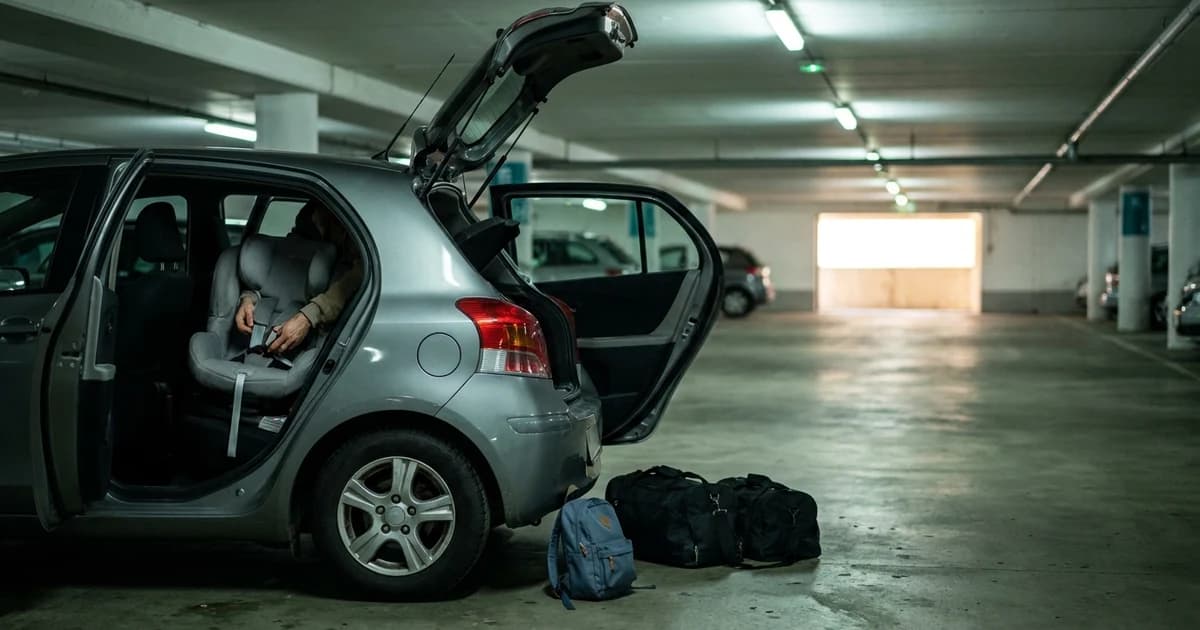
- Who installs it? In many markets the answer is you, in the parking garage, jet-lagged. Budget twenty minutes and read the seat's own instructions before you drive off.
- What is the plan if it is not there? Know the nearest baby-goods shop, or be willing to take a taxi to the hotel and sort it in the morning.
None of this argues against renting a car. It argues for settling the restraint question at the planning stage rather than at the counter, the same way you would settle documents for the kids before booking. Our London versus Paris comparison and the London family guide both assume a car-free week for exactly these reasons — and whether you need a car seat on the plane is a separate question with a different answer — our car seat on a plane checker answers it in about a minute. Once you are driving, how long a baby can stay in a car seat shapes how you break up the day.