Two ride-hail apps and every major rental company will supply a car seat in the United States, and each comes with conditions most families discover at the curb. Everywhere else the seat is yours to bring, and whether the law even asks for one in a taxi or an Uber depends on the state you land in.
Every figure below comes from the company’s or the state’s own page, linked at the claim and checked in October 2026. It is what the operators and the statutes say, not a hands-on test.
Your four options, side by side
| Option | Seat provided | Child size | Where | Cost (as of Oct 2026) |
|---|---|---|---|---|
| Uber Car Seat | Nuna RAVA convertible, rear- or forward-facing | 5–65 lb, 49 in or less | 8 metro areas, reservation only | $10 surcharge on the fare |
| Lyft car seat mode | IMMI Go, forward-facing only | 22–48 lb, 31–52 in, age 2+ | New York City only | $10 on the fare |
| Rental car desk | Infant, convertible or booster, varies by company | Convertibles often stop at 40 lb forward-facing | Most US airport locations | Per day; Avis and Budget publish caps of $84 and $87 |
| Bring your own | The seat your child already fits | Whatever the label says | Anywhere | Nothing extra, plus the carry |
Uber Car Seat: eight cities, one seat, reservation only
Uber lists the option in Los Angeles, San Francisco, Orlando, Miami, Atlanta, Washington DC, New York City and Chicago, with the New York suburbs and New Jersey marked as coming soon. You pick Car Seat in the app, set a reservation time and confirm.
| Uber Car Seat detail | What Uber states |
|---|---|
| The seat | Nuna RAVA convertible |
| Rear-facing | 5–50 lb, 49 in or less, birth to 2+ years |
| Forward-facing | Up to 65 lb, 49 in or less, at least 2 years old |
| Seats per trip | One; parents provide any others |
| Vehicle | Uber XL in every city except New York City |
| Who does what | Drivers are trained to install it; you buckle your child in |
The catches are the reservation and the single seat: no on-demand car seat at the airport curb, and a second child means a second seat of your own. It is also not a booster, a gap our travel booster seat guide covers.
Lyft car seat mode is New York City only
Lyft’s help centre states that car seat rides are currently only available in New York City. The seat is an IMMI Go, which is forward-facing; the child must be 31 to 52 inches tall and 22 to 48 pounds, and Lyft says it is not suitable for children under 2. It costs $10 more, one child per ride. Drivers who pass Lyft’s test install the seat; you check it and buckle the child.
Everywhere else, Lyft’s rider policy is plain: plan on bringing your own car seat, and it must meet the legal requirements in your state and city.
Bringing your own seat into a regular Uber or Lyft
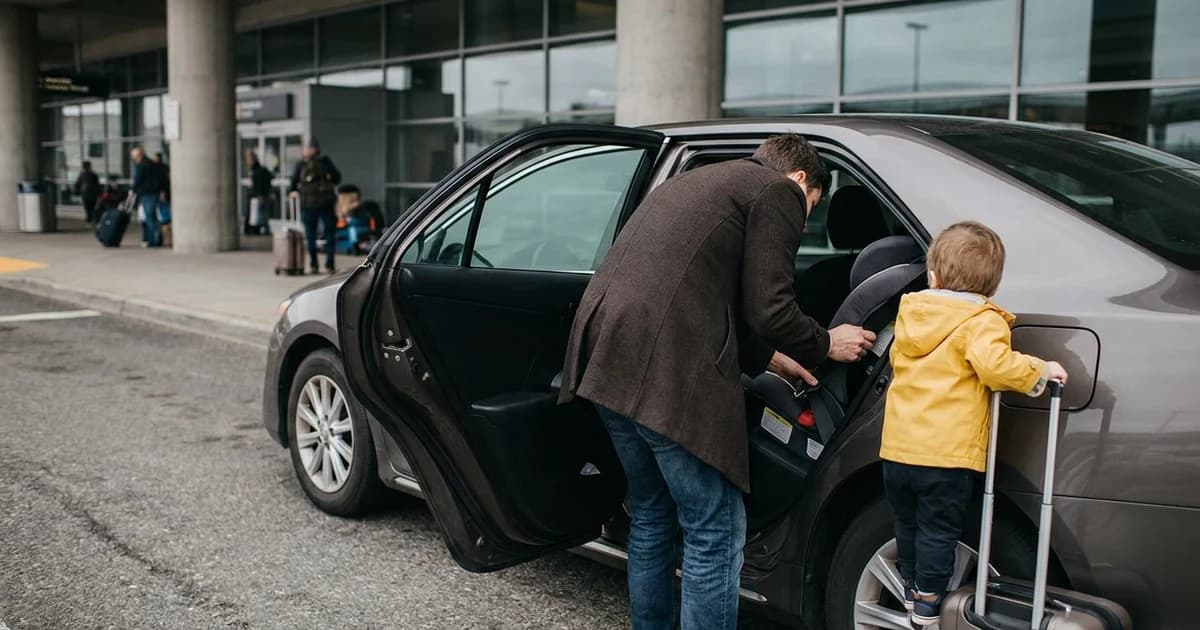
This is how most families do it, and both companies put the job on you. Uber’s community guidelines say that where a car seat is required by law, it is the rider’s responsibility to provide and fit a suitable car seat, that children aged 12 and under should ride in the back, and that a driver can cancel if a child does not appear to be within the seat’s height and weight limits or the driver feels the child cannot be carried safely.
- A driver can decline, so arriving without a seat can cost you the ride. Practise a seat-belt installation at home.
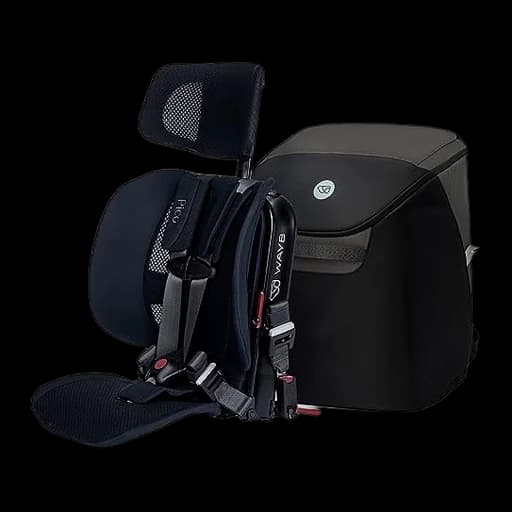
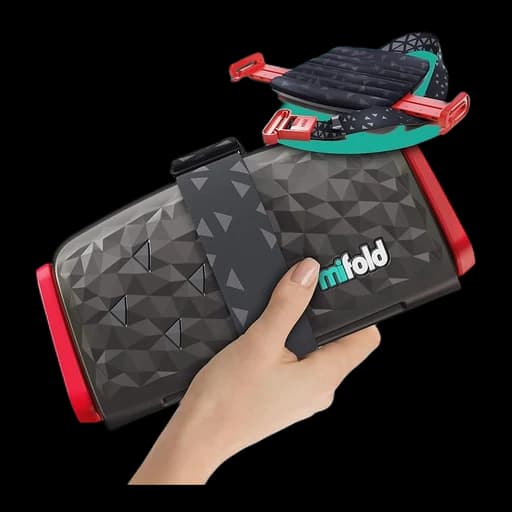
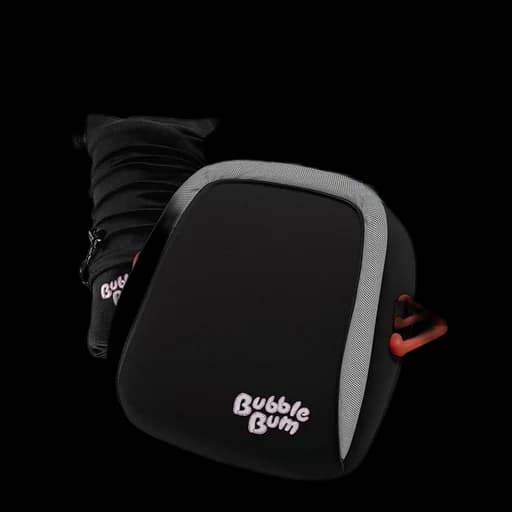
- Light seats travel better. The 8 lb WAYB Pico is forward-facing only, for children 2 and up from 26.5 to 50 pounds, and its maker markets it for rentals, rideshares and taxis. For a child who has genuinely outgrown a harness, a backless booster such as the mifold Comfort or BubbleBum fits in a daypack.
- In New York City, the Taxi and Limousine Commission says passengers are allowed to bring and use their own car seats and booster seats in TLC-licensed vehicles, and it keeps a list of car services that supply seats on request.
Are taxis and rideshares exempt from car seat laws?
Sometimes, and the answer changes at the state line. Many statutes carve out taxis or vehicles “for hire” without saying whether an app-booked car counts. Where the text does not settle it, the table says so rather than guessing.
| State | Seat or booster required (summary) | Taxis exempt? | Rideshare exempt? |
|---|---|---|---|
| California | Under 8 | No. The rule covers any passenger vehicle | No. If a parent is riding along, the law puts the duty on the parent, not the driver |
| New York | Under 8 | Yes. Taxis and liveries are exempt from the child-restraint rules | Outside New York City, no: state law defines a rideshare car as not a taxi or livery. In the city, app rides run as TLC-licensed for-hire vehicles; the TLC does not publish an exemption |
| Georgia | Under 8, unless over 4 ft 9 in | Yes, taxicabs and public transit | No. Georgia’s highway-safety office says rideshare services are not exempt |
| Florida | 5 and under | Yes. Chauffeur-driven taxis, limousines, sedans and vans hired for compensation | Not stated. Florida’s rideshare law calls a rideshare car “not a taxicab”; whether the wider “sedan” wording reaches it is unsettled |
| Nevada | Under 6 and under 57 in | Yes. “Public transportation, including a taxi” | Not stated |
| Illinois | Under 8 | Not stated. The Act covers “non-commercial” vehicles and never names taxis | Not stated |
| Washington DC | Under 8 | Yes. Vehicles used as taxis or for livery are outside the definition | Not stated |
| Hawaii | Under 10 (7 to 9 may use a belt if over 4 ft 9 in) | Yes. Any vehicle carrying people “for hire, compensation, or profit” | The wording appears to cover it; rideshare is not named |
| Texas | Under 8, unless taller than 4 ft 9 in | Yes. A vehicle “transporting passengers for hire” | Not named; the “for hire” wording may reach it |
| Massachusetts | Under 8, unless over 57 in | No. Only the $25 fine is waived for a licensed taxi with no seat | No |
| Washington | Booster until 4 ft 9 in | Yes. “For hire vehicles” | Not named |
Rental car seats: what each company states
Only two companies publish a US price; the rest show it at booking. Figures are each company’s own, as of October 2026, and most vary by location.
| Company | Stated fee | Seats | Booking notes |
|---|---|---|---|
| Avis | Usually $14 a day, max $84 per rental | Infant, convertible, booster (Evenflo) | Reserve under Rental Options; $50 fee if not returned to the same location |
| Budget | $14.50 a day, max $87 per rental | Child safety and booster seats | Guaranteed at corporate-owned locations if booked 48 hours ahead |
| Hertz | Not published; check at booking | Infant to 20 lb, convertible 20–40 lb, high-back booster 40–80 lb | Staff cannot install; AAA members get one seat free, subject to availability |
| Enterprise | Not published; check at booking | Infant, child, booster at many locations | Staff cannot install; you pay for any damage |
| National | Per-day charge, not published | Convertible: rear-facing to 30 lb, forward-facing 20–40 lb | Guaranteed at US and Canada airport locations; boosters limited |
| Alamo | Per-day charge, not published | Convertible: rear-facing to 30 lb, forward-facing 20–40 lb | Guaranteed at US and Canada airport locations; you install it |
| Sixt | Per day with a daily cap, shown before you confirm | Child, toddler or booster seat | Adding it online guarantees it; at the counter it depends on stock |
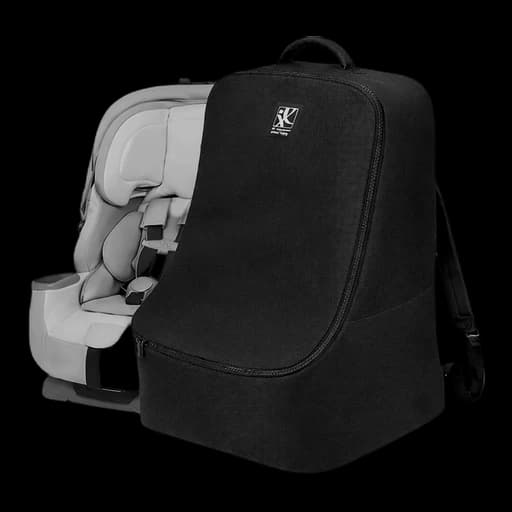
The honest trade-off is history. The AAP’s advice is to avoid used car seats if you don’t know the seat’s history and never to use one that has been in a moderate or severe crash, and a rental seat is a used seat whose history you cannot see. At the counter, run NHTSA’s used car seat checklist: a label with the manufacture date and model number (for a recall check), all its parts, and its instruction book. The one item you cannot check is whether it has been in a crash. If that bothers you, bring your own, and protect it with a padded car seat travel bag.
Which option for which age
| Age band | Best bet | Watch out for |
|---|---|---|
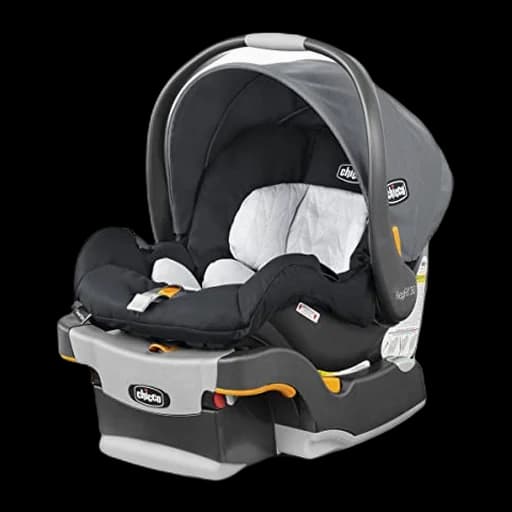
| Infant (rear-facing) | Your own infant seat, such as the Chicco KeyFit 30, carried on the plane if you buy a seat; Uber Car Seat in its eight cities | Lyft’s seat is not for under-2s; rental infant seats vary by location |
| Toddler (1–3) | Uber Car Seat where offered; otherwise an FAA-approved convertible you can fly with | The WAYB Pico starts at age 2 and 26.5 lb; rental convertibles cap at 40 lb |
| 4–7 | Keep the harness until it is outgrown, then a travel booster | Florida and Nevada stop requiring a seat earlier than the AAP’s belt-fit test |
| 8 and up | A booster until the adult belt fits | The AAP says most children don’t pass the belt-fit test until 10 to 12 |
A 7-year-old in an Uber splits the states. California, Georgia, Illinois, Massachusetts, New York, Texas and DC require a seat or booster under 8, subject to the height exceptions above; Hawaii runs to 10; Florida’s rule ends after age 5 and Nevada’s at 6. The AAP says most children will not fit a seat belt without a booster until 10 to 12 years of age, so state law alone usually moves a child out of a booster too early.
Before you book the ride
Check the city against Uber’s and Lyft’s lists, reserve early (Uber Car Seat is reservation-only and Budget’s guarantee needs 48 hours), count seats, since each app provides one, and weigh your child, because every option here has a hard ceiling. Whether to bring the seat on the plane is a separate question; our car seat on a plane checker answers it in a minute. On a long drive from the airport, how long a baby can stay in a car seat sets your stops, and driving abroad works differently: see car seats abroad: bring, rent or taxi.