The short answer
For a young infant, the working rule you'll hear most often is simple: no more than about two hours in a car seat at a stretch, then a real break out of the seat. The American Academy of Pediatrics frames it as a break every 2 to 3 hours on a day trip (every 4 to 6 hours at night). But the two-hour number is a guideline, not a law of physics, and it matters far more at six weeks than at six years. The actual risk it's protecting against is not "too much sitting" in general — it's a slumped, chin-to-chest position that can partly close a newborn's airway. Understanding why tells you when to relax the rule and when to take it seriously.
This guide breaks down how long is reasonable by age, how to schedule road-trip breaks, the warning signs that mean stop now, and the one mistake parents make most often (it happens after the drive, not during it).
Key takeaways
- The ~2-hour limit is real, but age-dependent. It's about a newborn's airway, not a stopwatch — it loosens as babies gain head control.
- The danger is the position, not the seat. A young infant's head can flex forward and narrow the airway, which is why a car seat is for travel, not unsupervised sleep.
- The most common mistake is leaving a sleeping baby in the seat after you park. Once you arrive, move them to a firm, flat surface on their back.
- Plan breaks before you leave. A long drive with a baby needs stops built into the route, not improvised at mile 300.
How long is reasonable, by age
There's no single magic number, because the risk profile changes as a child develops head and neck control. Here's a practical read:
| Age | Reasonable stretch in the seat | Main concern |
|---|---|---|
| Newborn to ~4 months | About 90 min to 2 hours, then out of the seat | Airway position; weak head control |
| ~4 to 12 months | Roughly 2 hours, with a real break | Airway easing; comfort and circulation |
| Toddler (1 to 3) | 2 to 3 hours, break for movement | Comfort, mood, restlessness |
| Preschool and up | Long stretches are fine; break for legs and bathroom | Boredom and stiffness, not safety |
Premature and low-birth-weight babies sit at higher risk and may need extra caution, including the in-hospital "car seat challenge" some are screened with before discharge. If your baby was early or small, ask your pediatrician what's right for your specific situation rather than relying on a generic number. At the other end of the range, once a child outgrows a harnessed seat our travel booster seat guide covers the packable options.
Flying with an infant seat? Our FAA-approved car seats for planes guide lists which infant seats carry the aircraft label and how wide they are, and the car seat on a plane checker tells you in eight questions whether to bring yours aboard, gate-check it or fly with a lap infant.
Why young babies are different
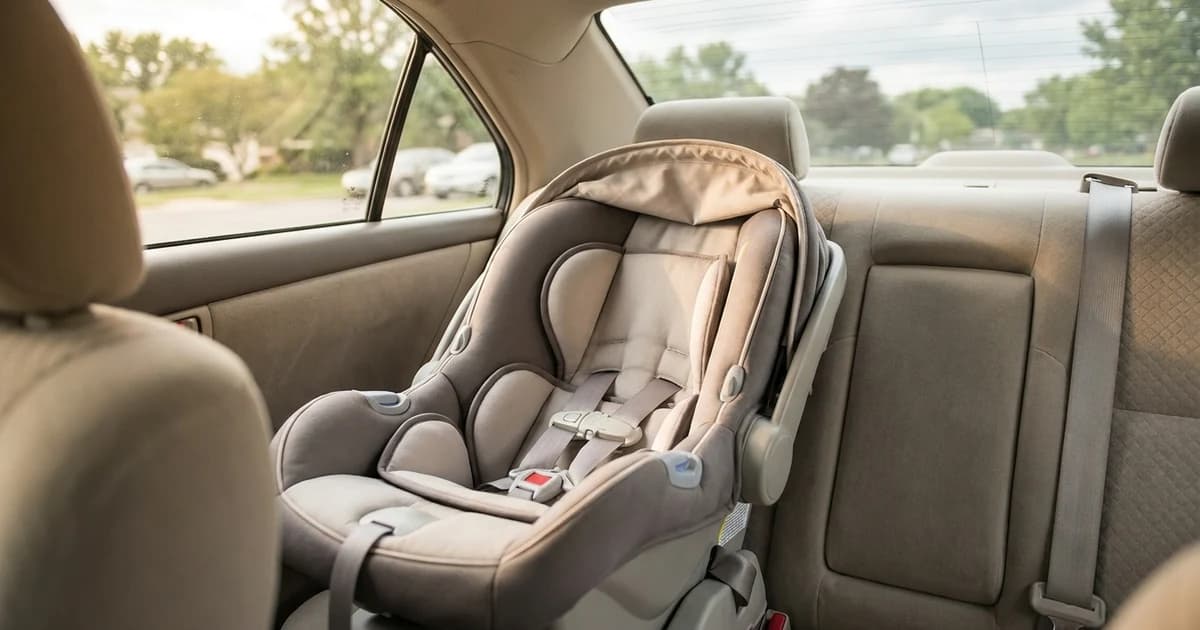
The reason newborns get the strictest version of this rule is mechanical. In a semi-reclined car seat, a baby with limited neck strength can let their head drop forward — jaw toward chest — which narrows the upper airway. A peer-reviewed study of infants in standard car safety seats documented exactly this: heads flexed forward, the jaw pressed down on the chest, visible labored breathing, after episodes in which caregivers saw the baby turn blue or pale and thought they had stopped breathing. Eight of the nine documented cases were healthy, full-term babies. The authors' conclusion was blunt: infants should not be left unattended to sleep in standard car safety seats.
That's the real safety message hiding inside the "two-hour rule." It isn't that sitting is bad for babies. It's that an unattended, slumped newborn in a reclined seat is in a position their body can't always self-correct. The harness that keeps them safe in a crash is also what stops them from shifting their own weight.
The mistake almost everyone makes
Here's the part that surprises parents: the riskiest moment usually isn't the drive — it's after you park. Your baby finally fell asleep in the car seat, so you carry the seat inside and let them keep sleeping in it for the next two hours while you unpack or rest. That's the scenario pediatric guidance specifically warns against.
The American Academy of Pediatrics is direct about it: "If your baby falls asleep in a car seat, stroller, swing, infant carrier or sling, you should move them to a firm sleep surface on their back as soon as possible." The AAP's car seat guidance describes the car seat as being for a child's travel only — not for sleeping, feeding, or any use outside the vehicle. So the rule isn't really about the two hours you spent driving. It's about the hours after, when the seat is being used as a bed it was never designed to be.
How to plan road-trip breaks
The fix for the in-car part is boring and effective: schedule stops before you leave, instead of pushing through because the baby is finally quiet.
- Map breaks at ~2-hour marks for babies under one. Pull over, take the baby fully out of the seat, and let them lie flat and stretch — not just shift the seat to a different angle.
- Tie breaks to feeds and diapers you'd need anyway. If you're stopping to feed, that's your reset; you rarely need a separate "safety stop" on top of it.
- Two adults? Rotate a back-seat watcher. One adult next to the baby can catch a slumped head early on a long stretch between stops.
- Drive during sleep windows, but don't extend them in the seat. Reaching your hotel mid-nap is great — just transfer the baby to a flat surface once you're settled.
- Build the route around the breaks. A 7-hour drive with a newborn is really three 2-hour legs with two genuine stops, and it helps to know where those stops are before you're tired and improvising.
For the older-kid version of "how do we survive the hours between stops," our road trip games guide and snacks and activities list cover the entertainment side. This post is the safety layer underneath them.
Warning signs to stop immediately
Most drives are uneventful, but know the cues that mean pull over now and take the baby out of the seat:
- The head has dropped fully forward with the chin pinned to the chest and won't reposition.
- Breathing looks labored — visible pulling-in at the ribs, grunting, or pauses.
- Any color change around the lips or face.
- The baby is unusually quiet, floppy, or hard to rouse after a long stretch.
None of these are common, and they're far more relevant for young infants than toddlers. But they're the reason the "just two more hours" instinct is worth resisting with a newborn.
A few myths worth retiring
- "Two hours is a hard legal limit." No. It's a sensible guideline aimed mostly at the first few months. A healthy two-year-old isn't in danger at hour two and one minute.
- "Aftermarket head supports and inserts make it safer." Only those that come with the seat. Add-on products not tested with your specific seat can interfere with positioning or harness fit.
- "If they're asleep, leave them be." The opposite, for sleep outside the car — move a sleeping infant to a flat surface once you arrive.
- "Rear-facing is just for newborns." AAP guidance is to keep kids rear-facing as long as possible, until they hit the top height or weight their seat allows — often well into the toddler years.
The bottom line
For a young baby, treat ~2 hours as a real ceiling and build genuine breaks into long drives. As your child grows and gains head control, the number stops being a safety limit and becomes a comfort one. And whatever the age, remember the part most parents miss: the car seat is for the road, not for the nap after it. The single highest-value habit is moving a sleeping infant to a firm, flat surface the moment you arrive.
Heading somewhere by air instead? See whether you need a car seat on a plane — our car seat on a plane checker answers it for your exact seat, and a car seat travel bag protects it if it goes in the hold. Driving overseas? See whether to bring, rent, or skip a car seat abroad. Taking an Uber or renting a car at home? See car seats in Ubers, Lyfts and rental cars. For the broader first-trip picture, traveling with a baby for the first time, and for the bags themselves, our family vacation packing list.
Sources
- American Academy of Pediatrics, HealthyChildren.org — A Parent's Guide to Safe Sleep (move a sleeping baby out of a car seat to a firm flat surface).
- American Academy of Pediatrics, HealthyChildren.org — Car Seats: Information for Families (rear-facing as long as possible; car seats for travel only).
- Apparently life threatening events in infant car safety seats — peer-reviewed study (NIH/PMC) (head flexion, labored breathing and apparently life-threatening events in young infants).