Search “travel booster seat” and you get a list of cushions ranked by how small they fold. Packability is the easy part. The hard part is that four genuinely different products compete under that one phrase — backless cushions, folding high-backs, an inflatable, and a wearable harness that is not a booster at all — and the one you should buy depends on a vehicle you have not seen yet.
We researched what each type is certified for, what the manufacturers actually state, and the vehicle conditions that quietly rule some of them out.
The six travel boosters, side by side
Three are backless cushions, one is a folding high-back, one inflates, and one is a vest. Every limit below is the maker’s own, linked at the claim.
| Seat | Type | Maker’s stated limits | Why you’d travel with it |
|---|---|---|---|
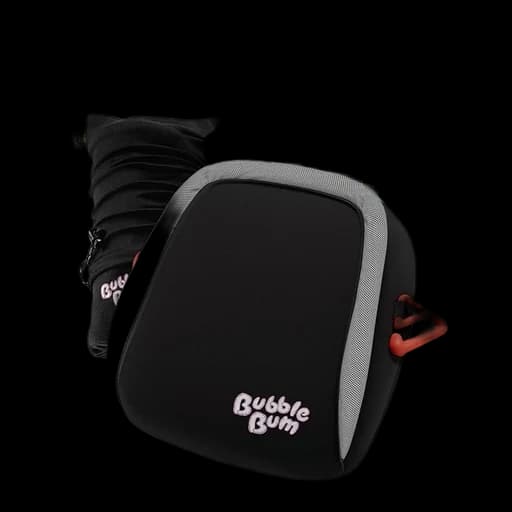
| BubbleBum Inflatable Travel Booster | Inflatable backless | 40–100 lb | Deflates into a daypack; three across a back seat |
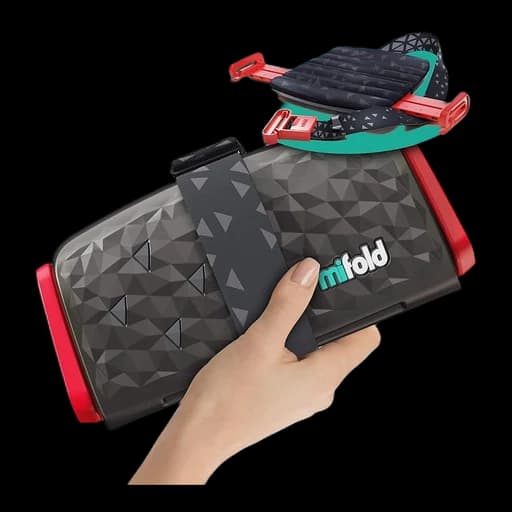
| mifold Comfort Grab-and-Go Backless Booster | Rigid backless | 4+ years, 40–100 lb, 43.5–59 in | Pulls the belt down instead of lifting the child up; glove-box sized |
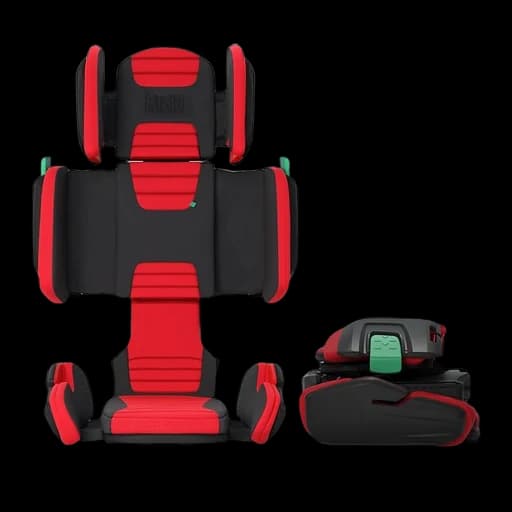
| mifold hifold Folding High-Back Booster | Folding high-back | 4+ years, 40–100 lb | The only packable option with head and shoulder support |
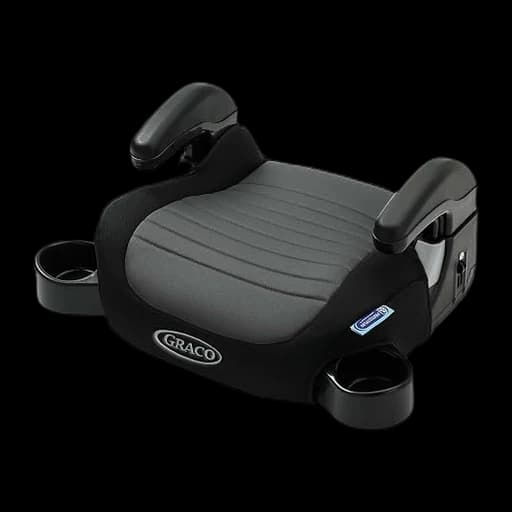
| Graco TurboBooster 2.0 Backless | Rigid backless | Ages 4–10, 40–100 lb, up to 57 in | Cheap enough to leave with grandparents; 15.5 in wide |
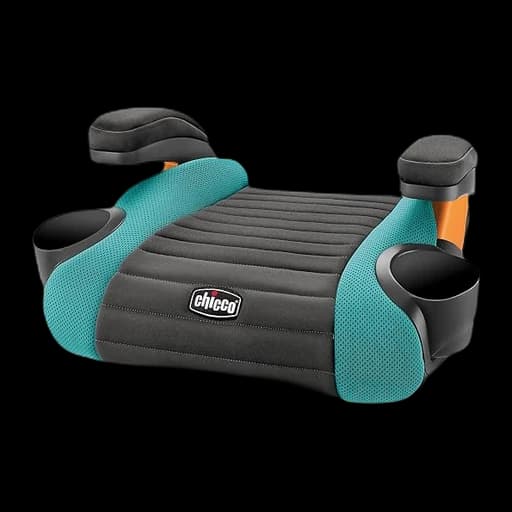
| Chicco GoFit Backless Booster | Rigid backless | 4+ years, 40–110 lb, 44–57 in | Highest weight ceiling here; carry handle, no LATCH |
| RideSafer Gen 5 Travel Vest (currently not sold on Amazon) | Wearable harness | Small size: 3+ years, 30–60 lb | The one option that works with a lap-only belt |
No booster is usable on the plane, so buy for the ground
The FAA’s flying-with-children guidance is blunt about it: boosters and backless restraints are barred for taxi, take-off and landing. The only supplemental device the FAA certifies for a child is AmSafe’s CARES harness, and the FAA states it is for children up to 40 inches tall weighing 22 to 44 pounds — which a booster-sized child has already outgrown. On board, a 45-pound six-year-old uses the aircraft seat belt, like everyone else. Our guide to whether you need a car seat on a plane covers the under-40-pound side of that decision.
Your child may not be ready for a booster at all
A booster is a demotion from a harness, not an upgrade. NHTSA’s guidance is to keep a 4- to 7-year-old in a forward-facing seat with a harness and tether until they reach the top height or weight the manufacturer allows. The AAP lists the signals that the harness seat is genuinely outgrown — any one of them is enough:
- They have reached the top weight or height printed on the seat.
- Their shoulders sit above the top harness slots.
- The tops of their ears have reached the top of the shell.
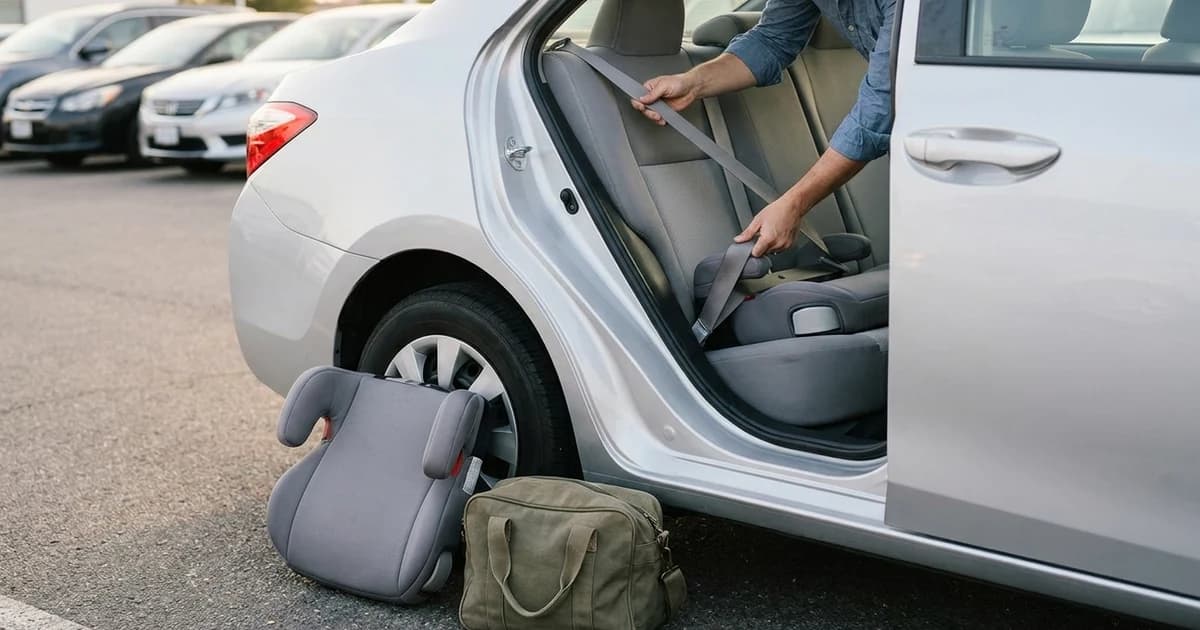
At the other end, the booster stays until the adult belt fits without it. The AAP describes a correct fit as a shoulder belt across the middle of the chest and shoulder rather than the neck, a lap belt low and snug on the upper thighs rather than the belly, and a child tall enough to sit back against the seat with knees bent over the edge — and stay that way for the whole trip. That is typically 4 feet 9 inches and somewhere between 8 and 12 years old, and the AAP notes most children will not pass it until 10 to 12.
A lap-only belt rules out every booster on this list
This is the fact that decides more travel bookings than packability, and it is almost never mentioned in a roundup. Lap belts work with harnessed seats but, in the AAP’s words, can never be used with a booster seat. Where does a lap-only belt still turn up?
- Older taxis and airport shuttles.
- Rear centre seats and third rows, including in current models.
- Minibuses, shared vans and hotel transfers.
- Plenty of rental fleets outside the US.
The AAP names the alternative directly: a travel vest, useful when a vehicle has lap-only belts in the rear, for some children with special needs, or for a child past their harness seat’s weight limit. That is the RideSafer’s actual reason to exist. Its maker, Safe Traffic System, states the vest is tested and certified to the dynamic test requirements specified in FMVSS 213 as a harness, and that it can be used either with a lap belt plus a top tether anchor, or with a lap-and-shoulder belt with or without the tether. Sizes run 22 to 110 pounds across four sizes. Worth knowing before you order: the Amazon listing for the Gen 5 carries a transition notice saying a Gen 6 is available or coming soon, so check which generation you are being shipped.
Rules also change the moment you land. UK law requires a child car seat until a child is 12 or 135 cm tall and only permits seats bearing a capital E in a circle with R129 or ECE R44 — a mark no US-certified booster carries. Other countries set their own thresholds, so check the destination’s own transport authority rather than assuming. We walk through the whole call in car seats abroad: bring yours, rent, or take a taxi.
Uber’s car seat is not a booster, and it is in eight metros
Uber Car Seat is real, and narrower than families expect. Uber states the option includes a Nuna RAVA convertible seat for children weighing 5 to 65 pounds, must be booked as a reservation, and adds a $10 surcharge. It is listed in Los Angeles, San Francisco, Orlando, Miami, Atlanta, Washington DC, New York City and Chicago, with New York suburbs and New Jersey shown as coming soon.
Read that as three constraints:
- Wrong category. It is a harnessed convertible seat, not a booster.
- Wrong ceiling. It stops at 65 lb, which many booster-age children have passed.
- Wrong city, usually. Everywhere else it simply does not exist.
Check Uber for your specific destination before you plan around it, and assume you are bringing your own. Our guide to Uber, Lyft and rental cars with a car seat has the city list, Lyft's New York-only option and rental-desk seat fees.
Which one to bring, by trip shape
- One flight, one rental car, one child. The Graco TurboBooster 2.0 or the Chicco GoFit — a rigid backless booster is cheap, familiar and fine as checked baggage.
- Carry-on only, no checked bag. The BubbleBum, which deflates flat, or the mifold Comfort, which folds to roughly glove-box size.
- Three kids across one back seat. A narrow backless is the only thing that fits; the BubbleBum and mifold are both sold on that geometry.
- Rental car with low seat backs or no rear headrests. The hifold — the AAP is explicit that high-back boosters are the ones for vehicles without headrests.
- Taxis, older cars, or anywhere you cannot promise a shoulder belt. The RideSafer vest (currently not sold on Amazon), the only option here rated for a lap-only belt.
- Long drives with a child who sleeps in the car. A high-back, every time — a slumping head in a backless booster pulls the shoulder belt out of position. See also how long a child should stay in a car seat in one stretch.
What to skip
- Aftermarket belt adjusters. The AAP is unambiguous that these products are unapproved and should not be used, and can push the lap belt onto the stomach.
- A backless booster in a car with a low seat back. There is nothing behind your child’s head; that is the case the high-back exists for.
- Buying anything on this page to solve a plane problem. It will not be allowed out of the bag until you land.
The other half of this problem is getting whatever you choose through the airport intact; a dedicated post on car seat travel bags and gate-checking is coming next. In the meantime, the rest of our researched picks live on the family travel gear page.