The Short Version
Airport security is the part of flying with kids that derails the most families, and almost always because of two myths: that baby formula counts against the liquids limit, and that little kids have to take their shoes off like adults. Neither is true. The Transportation Security Administration (TSA) carves out real exceptions for families, but only if you know to ask for them at the right moment. This is the checkpoint, decoded by age, so you can move through it without unpacking your entire diaper bag onto the belt.
Five Things Most Parents Get Wrong
- Formula and breast milk are exempt from the 3-1-1 rule. You can carry them in quantities over 3.4 oz (100 ml), and they do not have to fit in a quart-sized bag. TSA classifies them as medically necessary liquids.
- Kids 12 and under keep their shoes, light jackets, and headwear on. No tiny socks-on-cold-floor scramble required.
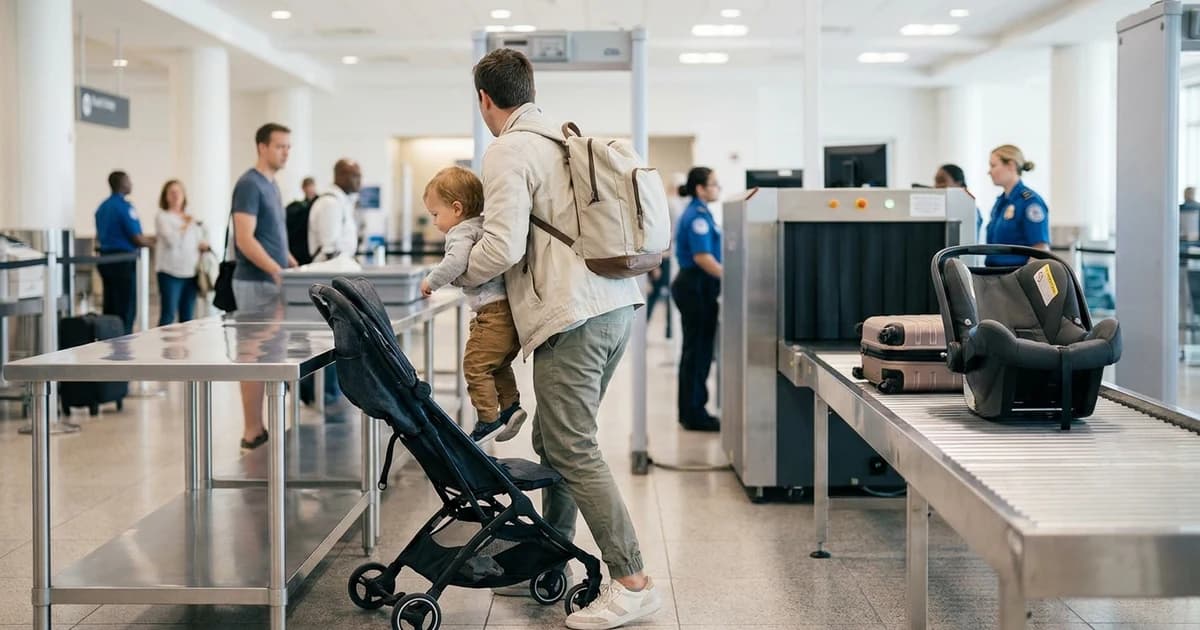
- Everyone comes out of the stroller and car seat. Babies get carried through the metal detector in your arms; the gear rides the X-ray belt separately.
- Your child doesn't even have to be with you to carry breast milk. A parent flying solo to pump-and-ship can bring it through.
- You have to announce the liquids first. The exemption only kicks in if you tell the officer at the start of screening and pull the items out yourself.
The Liquids Exemption, Step by Step
This is the single highest-value thing to get right. Here's the exact sequence TSA describes:
- Tell the officer before screening starts that you're carrying formula, breast milk, toddler drinks, or baby food over 3.4 oz.
- Remove those items from your bag so they can be screened separately from everything else.
- Expect an extra test. Officers may test the liquid for explosives or run it through a bottle scanner — they will never put anything into the liquid itself.
- If you'd rather not have it X-rayed or opened, say so. TSA will use alternate screening, but you (the traveling guardian) will then go through additional screening, including the body scanner.
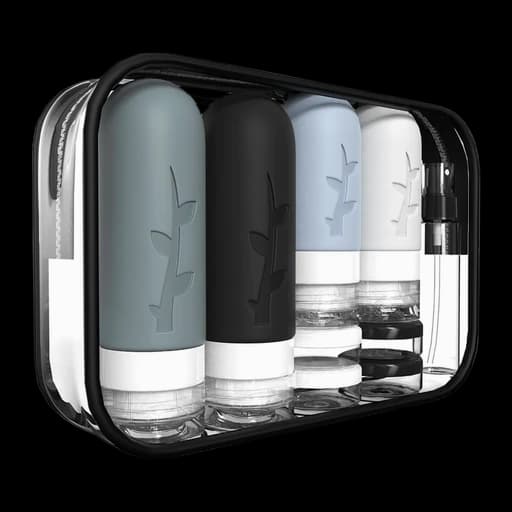
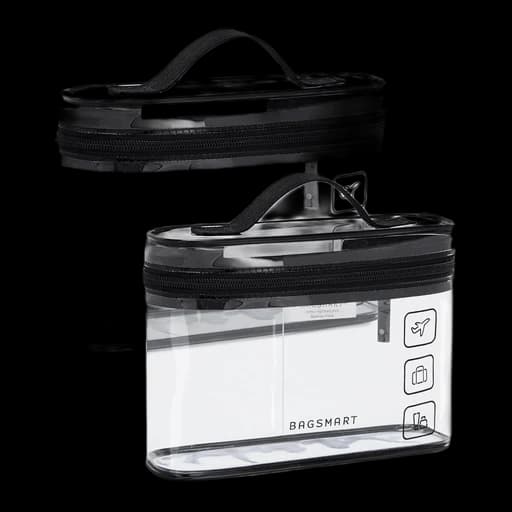
Packaging tip straight from TSA: clear, translucent bottles screen faster than opaque plastic bags or pouches, which often can't be read by the bottle scanner and may have to be opened.
What Actually Happens at the Checkpoint, by Age
| Age / situation | Shoes & jackets | How they're screened |
|---|---|---|
| Infant (carried) | On | Carried in your arms or a sling/carrier through the metal detector; you cannot go through the body scanner holding a child |
| Toddler who won't walk solo | On | Carried through the metal detector in your arms |
| Child who can walk | On (under 13) | May walk through the metal detector separately; gets multiple tries if it alarms before any pat-down |
| Child who can stand still ~5 sec | Light jacket off for scanner | May use the body scanner; under-13 alarms get a re-try, not an automatic pat-down |
| Stroller / car seat / carrier | n/a | Goes on the X-ray belt; oversized gear gets a visual/physical inspection instead |
Two details that smooth the whole thing: children are never separated from their parent or guardian, and TSA runs modified procedures specifically to reduce the chance a kid needs a pat-down. If your child has a medical device or you're worried about the process, TSA Cares (855-787-2227) will arrange checkpoint assistance if you call at least 72 hours ahead.
Your 10-Minute Pre-Checkpoint Routine
- Load the gear early. Collapse the stroller and have the car seat ready before you reach the belt — fumbling at the X-ray is where the line backs up.
- Move liquids to the top of the diaper bag so you can pull formula, milk, and pouches out fast.
- Empty the stroller pockets. Toys, blankets, and bags all have to go through the X-ray, so consolidate them into one carry-on or a bin.
- Keep little shoes on. Under 13, they stay on; don't waste time.
- Decide who carries the baby. The adult holding an infant goes through the metal detector, not the scanner, so split duties if one parent has a laptop bag to manage.
What This Doesn't Cover
These are federal TSA rules for U.S. airports, and the officer at the checkpoint always has the final call on any individual item. Foreign airports set their own liquid and screening policies — many do not exempt formula as generously — so check the departing airport's authority when you fly home from abroad. TSA PreCheck can let the whole family keep shoes and light jackets on and skip the laptop/liquids unpacking, but children 12 and under can already use the PreCheck lane with an enrolled parent.
Once You're Through Security
The checkpoint is the hard part; the gate and the flight are mostly about keeping a small human content. If you're flying with a baby or toddler, our companion guides cover what comes next: what to pack for baby's first flight, whether you need a car seat on the plane, and how to keep kids entertained at the airport during the inevitable wait. For the flight itself, see flying with a toddler and surviving long flights with kids.
Sources
- TSA — Traveling with Children (shoes/jackets for under-13, stroller and car seat X-ray screening, metal detector vs. imaging technology, TSA Cares)
- TSA — Breast Milk, Formula & Toddler Food (over-3.4 oz exemption, no quart bag required, declare-and-separate screening process, cooling accessories)