Can kids really get through a flight without a tablet?
Short version: yes, including long ones, but not with a bag of random toys. What works is a plan: activities chosen for how many minutes of engagement they buy per ounce of carry-on weight, banded by age, and released one at a time instead of dumped on the tray table. This guide is that plan. If you want the broader flight logistics, seats, security, jet lag, start at our flying with kids hub; this post is only about the entertainment problem.
One honest note up front: this is a researched plan built on pediatric guidance and parent-reported engagement times, not a lab study. Your kid is the final reviewer.
Key takeaways
- Score activities in minutes per ounce. Carry-on weight and space are the real budget. A one-ounce bag of pipe cleaners routinely outperforms a one-pound activity kit.
- Screen-free is the pediatric default anyway for little kids. The AAP discourages screen media entirely under 18 months and caps ages 2 to 5 at an hour a day, so a five-hour flight needs a non-screen plan regardless.
- Release one activity at a time. Novelty is the engine. A new item every 30 to 45 minutes beats everything at once by a wide margin.
- Save the best two for the hard windows: the stretch between boarding and cruising, and the descent.
1. The minutes-per-ounce rule
Every flight-entertainment list ranks toys by cuteness. Rank them by return on weight instead: realistic minutes of solo engagement divided by ounces in the bag. Estimates below are drawn from parent-reported ranges across the sources we reviewed, rounded to be conservative:
| Activity | Approx. weight | Realistic engagement | Minutes per ounce |
|---|---|---|---|
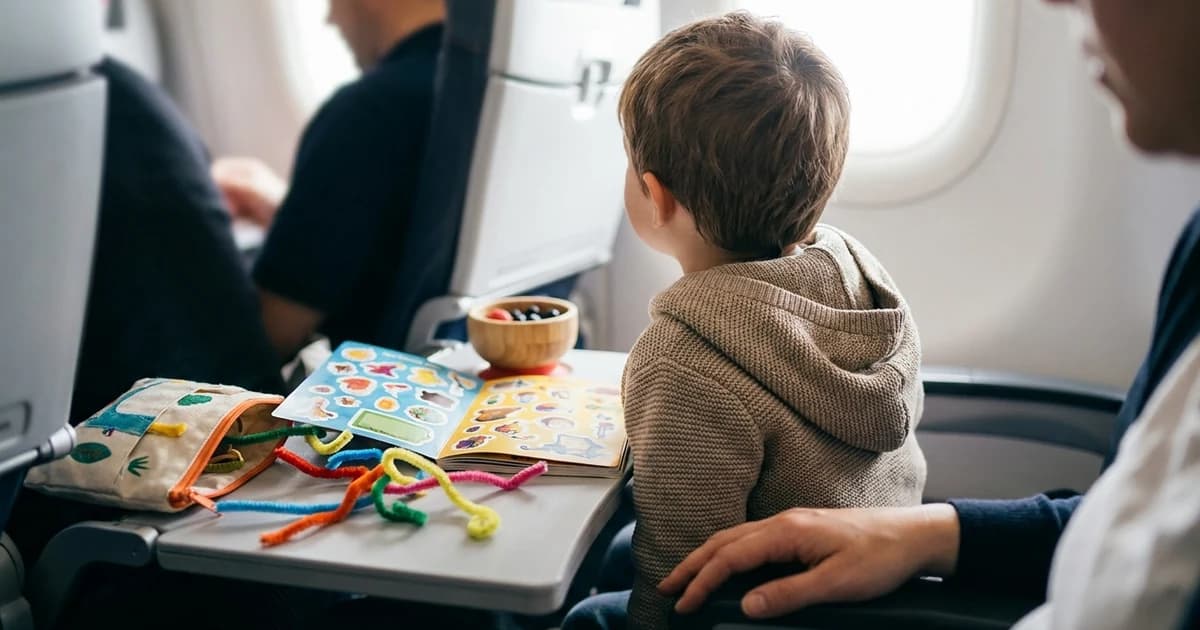
| Pipe cleaners (10 to 15) | ~1 oz | 20 to 30 min, repeatable | Best in the bag |
| Painter's tape roll | ~3 oz | 20 to 30 min (roads, runways, window art; peels off clean) | Excellent |
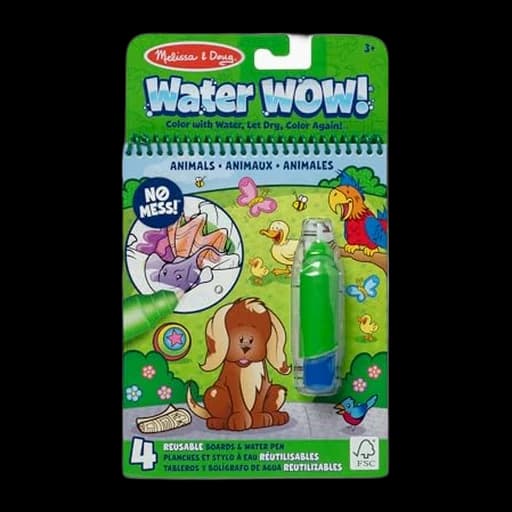
| Water-reveal paint pad | ~4 oz | 20 to 30 min, resets as it dries | Excellent |
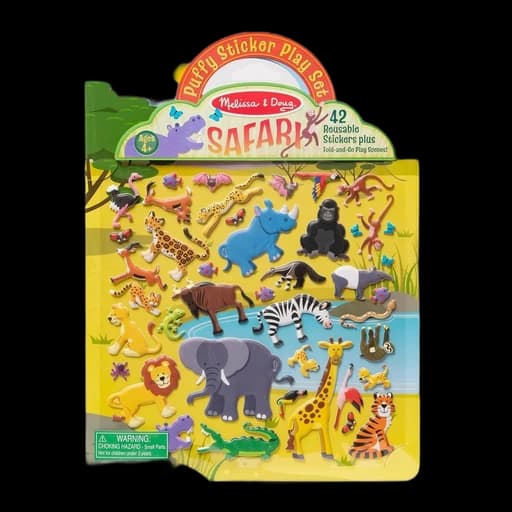
| Reusable sticker book | ~5 oz | 30 to 45 min | Very good |
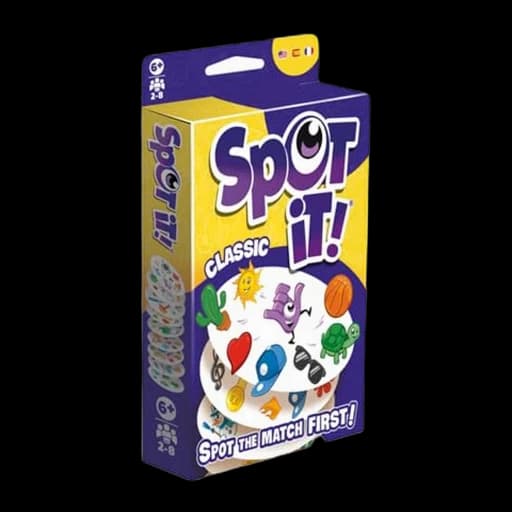
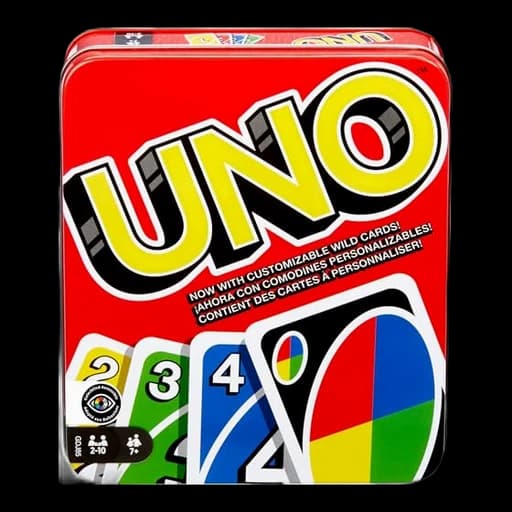
| Card deck or compact travel board game | ~4 oz | 30 to 60 min for ages 5+ | Very good, needs a partner |
| Crayons + small pad | ~6 oz | 15 to 25 min per session | Good |
| Hardcover activity kit in a box | 16+ oz | Often under 20 min | Skip it |
For the 5-and-up crowd, the card-deck slot is worth upgrading: a compact travel board game that actually works on a tray table turns the longest mid-flight hour into the thing your kid remembers about the trip. Magnetic pieces matter more than the title. Our own travel-friendly toys and games roundup covers which specific picks survive being dropped under seat 23C.
2. The plan by age band
Under 2: the lap is the activity
Do not pack entertainment so much as rotation. The AAP discourages screen media other than video chat before 18 months, and notes infants learn from caregiver interaction, not media, so this band was always going to be analog. What works: a windowed snack cup, one board book, a favorite small lovey, and walking the aisle when the seatbelt sign allows. Plan in 15-minute cycles and protect the nap above all else. Our baby first-flight packing list covers the full diaper-bag load-out.
Ages 2 to 4: novelty in 20-minute blocks
This is the hardest band, and the one the minutes-per-ounce table is built for. Pack five to six items, each individually wrapped in tissue paper or foil. The unwrapping is itself two minutes of entertainment, and a wrapped item is new in a way a visible one is not. Release one per 30 to 45 minutes. Snacks count as activities at this age: a bento box with many small compartments buys 20 minutes.
Ages 5 to 8: games with a partner
Shift from solo novelty to shared play. Card games, magnetic board games, paper games like hangman and dots-and-boxes, and a first chapter-book read-aloud. One parent-facing hour of games beats three hours of solo toys at this age, and it is the band where the travel board game earns its seat in the bag.
Ages 9 to 12: hand them the plan
Let them pack their own flight bag against a one-bag, you-carry-it rule. Puzzle books, a real novel, a sketch kit, a downloaded audiobook. Kids this age mostly need ownership, not entertainment.
3. Spend the gate time, don't save it
The most common mistake is starting the activity bag at the gate. Gate time is for burning energy, not conserving activities: walk the concourse, find the window, count tails. Every activity used pre-boarding is one you no longer have over Kansas. Our airport entertainment guide has 15 zero-cost gate games. And when you book, remember the cheapest fix of all: a shorter flight. A nonstop beats a cheap connection by exactly one entire extra round of the activity bag.
What most guides skip: the two hard windows are not the middle of the flight. They are the 20 to 40 minutes between boarding and cruising altitude, when tray tables are up and nothing has started yet, and the descent, when ears hurt and everyone is done. Hold your two highest-scoring activities for those windows, and pair the descent one with swallowing snacks, which also helps the ear-pressure problem.
4. What seasoned parents pack, and what they skip
- Pack: a dedicated flight bag the kid does not see before boarding, one gallon zip bag per activity, a surprise item for the worst moment, and child headphones with a downloaded audiobook (our kids' headphones guide covers the volume-limit question). Audio is the honest gray zone: it is not screen time in any meaningful sense, and a 45-minute story is the single longest quiet stretch most parents report.
- Skip: anything with more than six pieces, anything that rolls, noise-making toys (your seatmates), slime and putty (upholstery), and brand-new activity types the kid has never tried. Test the water-paint pad at home once so the plane version is familiar-but-fresh.
- The reset trick: a bathroom walk is an activity. When attention collapses, a full walk to the back of the plane resets a toddler for another 20-minute block.
Sources
- American Academy of Pediatrics — Media and Young Minds, Pediatrics (2016): discourage screen media other than video chat under 18 months; limit ages 2 to 5 to one hour per day of high-quality programming
- HealthyChildren.org (AAP) — Kids & Screen Time: the 5 C's of Media Guidance (the AAP's current age-based media framework)