A toddler carrier for travel does a different job from the one you used at home. It has to pack small, come off in a security line, and hold a two-year-old who weighs far more than they did at birth — and carriers sold as “toddler” disagree by 20 pounds about what that means.
Choose the build by where you will carry, then check your child against the maker's range — not the word “toddler” on the box. Tushbaby rates its hip seat up to 45 lb; Tula's Kid Carrier starts at 25 lb and 32 inches; Osprey's framed packs stop at 40 lb for the child.
We researched the carriers parents take on trips against the manufacturers' own limits. We have not load-tested them; every range and weight below is the maker's, linked at the claim, and read on September 24, 2026.
Five carriers, three builds
| Carrier | Build | Maker's child range | Carrier weight | Best for |
|---|---|---|---|---|
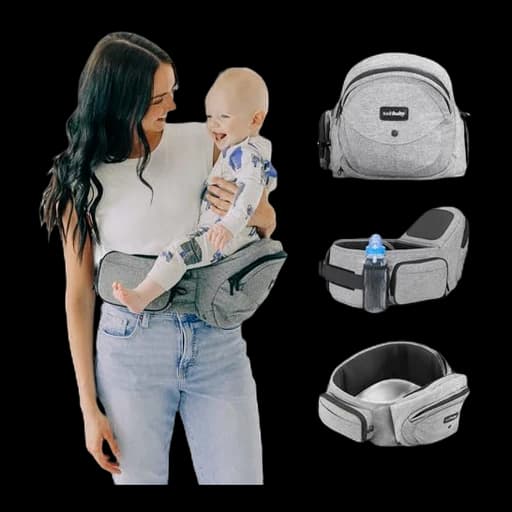
| Tushbaby Hip Carrier | Hip seat on a waist belt | Newborn to 36 months, up to 45 lb | Under 1 lb | Airports, short city hops |
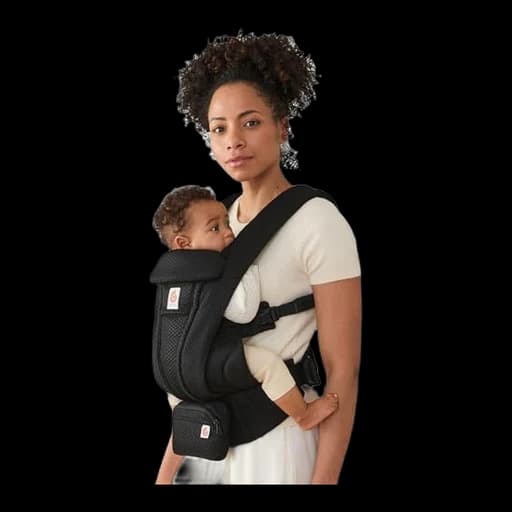
| Ergobaby Omni Deluxe | Soft structured, 4 positions | 7–45 lb, 0–48 months | Not published | One carrier from birth |
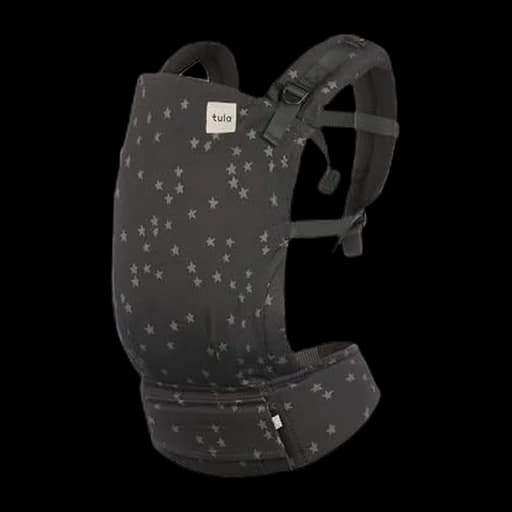
| Tula Kid Carrier | Soft structured, toddler size | 25–60 lb, ages 2–6 | Not published | Heavy toddlers, long walking days |
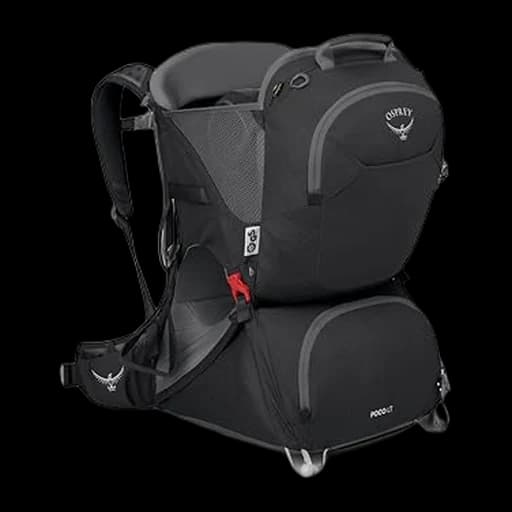
| Osprey Poco LT | Framed backpack | 16–40 lb child, 6 months+ | 5.56 lb | Easy trails, crowds |
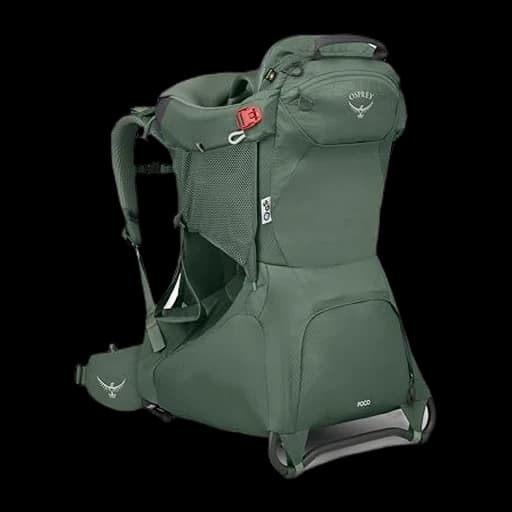
| Osprey Poco | Framed backpack | 16–40 lb child, 6 months+ | 7.69 lb | Trail-first trips |
Both Osprey packs also carry an overall cap: 48.5 lb for child, gear and pack combined. On the LT that leaves about 43 lb for a child and whatever is in the pockets, so the snack bag counts.
Hip seat, soft carrier or frame
- Hip seat. A padded shelf on a waist belt. The child sits on your hip and gets on and off all day. It takes the weight off your arm, not your shoulders — you still steady the child with a hand unless you add straps.
- Soft structured carrier. Shoulder straps and a waist belt, fully hands-free, with a back carry for bigger toddlers. Packs into a tote. The one for a full day on foot in a city.
- Framed backpack. A metal frame with a kickstand and a sunshade. Best on trails and uneven ground; bulky everywhere else, including the aisle of a plane.
At the airport
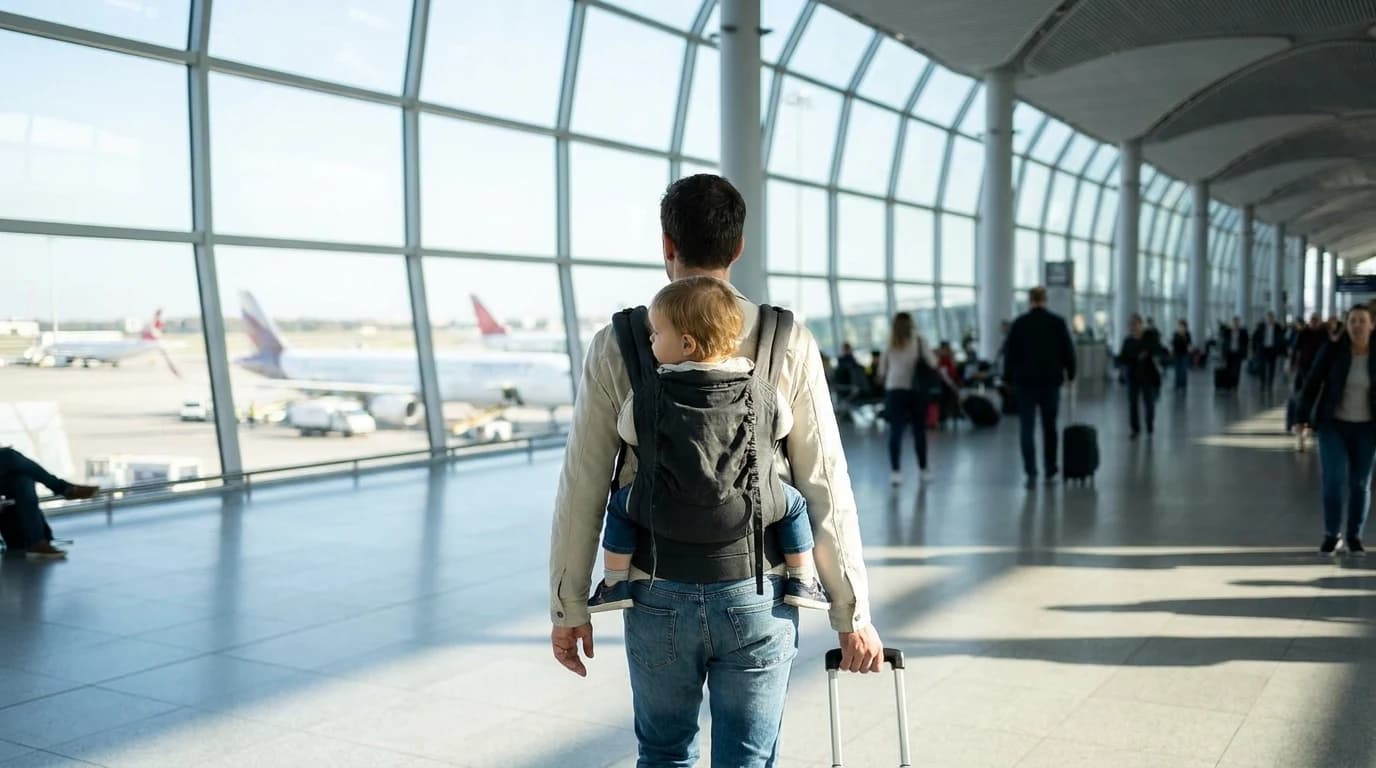
A carrier is the easiest way through security with a small child: TSA says infants may be carried in a sling or carrier through the walk-through metal detector, though they may get extra screening, and that baby carriers go through the X-ray. On board, the carrier comes off for the parts that matter — the FAA prohibits baby carriers during taxi, takeoff and landing. Plan on a carrier for the terminal and a car seat or CARES harness for the seat.
The five in detail
Tushbaby Hip Carrier — the airport carrier
The Tushbaby is the lightest option here and the only one that goes on and off in seconds. Tushbaby rates it newborn to 36 months and up to 45 lb for a 23–44 inch waist, says it weighs under a pound, and says it rolls up small enough for a diaper bag or carry-on. Its storage pockets are where the passports go. It supports the child; it does not hold them hands-free without Tushbaby's separate attachment.
View on Amazon → Tushbaby Hip Carrier
Ergobaby Omni Deluxe — one carrier from birth
If the trip is with a baby who will be a toddler by the next one, the Omni Deluxe covers both. Ergobaby lists its Omni carriers at 7–45 lb and 0–48 months, in four positions including back carry. That is the Tushbaby's ceiling with shoulder straps doing the work. For a child already past 30 lb, the Tula Kid is built for the next stage.
View on Amazon → Ergobaby Omni Deluxe
Tula Kid Carrier — for the child too big for everything else
Tula's former Toddler Carrier, now the Kid Carrier, is the only carrier here sized past 45 lb. Tula rates it 25–60 lb, ages 2 to 6, starting at a minimum height of 32 inches, in a front inward or back carry. Under 25 lb it is the wrong size; Tula's Original carrier covers 7–45 lb instead. Tula does not publish the carrier's own weight.
View on Amazon → Tula Kid Carrier
Osprey Poco LT — a frame that folds flat
The Poco LT is Osprey's lighter framed carrier: 5.56 lb with its sunshade, folding to 29.5 x 14 x 6.5 inches. Osprey's manual sets the child at 16–40 lb and not under six months. It is the frame to take when the itinerary has an easy trail, a zoo or a crowded old town where a stroller will not go.
View on Amazon → Osprey Poco LT
Osprey Poco — the full hiking carrier
The standard Poco weighs 7.69 lb and folds to 11 inches deep rather than the LT's 6.5, with the same 16–40 lb child range and 48.5 lb total cap. Osprey lists it for backpacking and hiking, with a fully padded child cockpit and a tensioned-mesh back panel. Buy it only if the trip is built around trails; through a terminal it is a lot of frame.
View on Amazon → Osprey Poco
Which one for your trip
City break with lots of transit. The Tushbaby for a child who walks some of the way; the Omni Deluxe or Tula Kid for one who will ride all day.
Beach or resort. The Tushbaby. It packs the smallest and comes off the fastest — pair it with the tips in our toddler beach destinations guide.
National parks and trails. The Poco LT for mixed days, the Poco for trail-first ones. Check the child is at least 16 lb and six months old first.
Flying with a baby under one. The Omni Deluxe, which starts at 7 lb, and read our first-flight packing list.
A carrier replaces a stroller only some of the time. If you are weighing both, our travel stroller guide covers the other half, and the airport security guide covers the line you will carry it through.