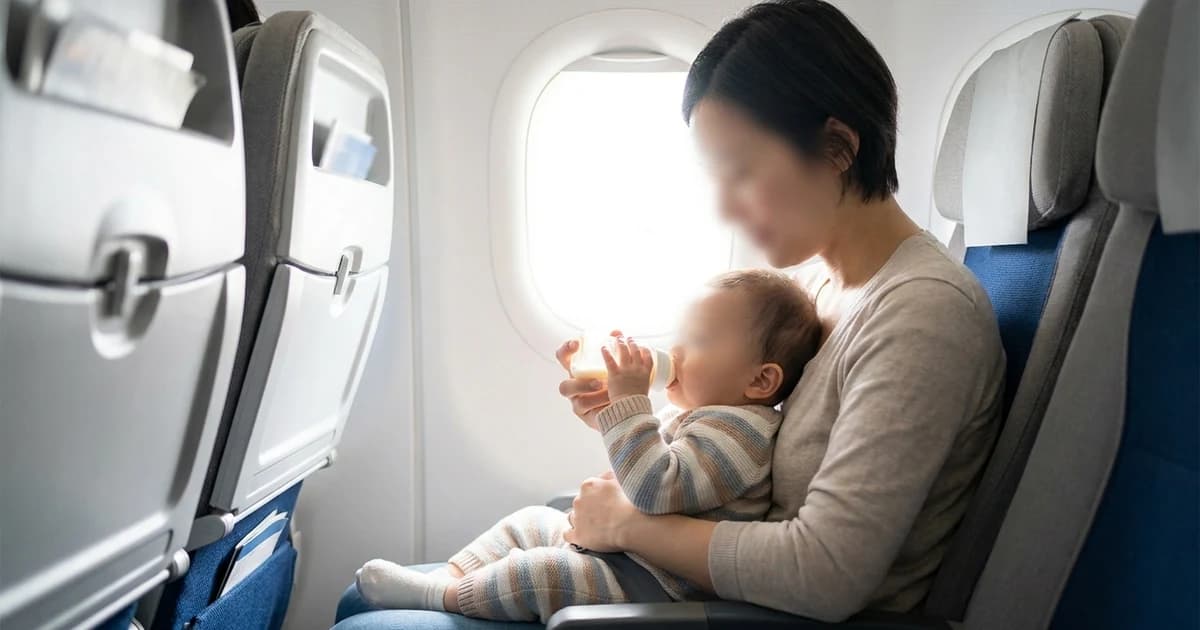
The short version: a child's ears hurt on a plane because the air pressure changes faster than their narrow ear tubes can keep up with. The fix isn't a gadget or a pill. It's getting them to swallow at the right moments. Here's exactly how to do that by age, and the one piece of common advice that can actually backfire.
Why it happens (and why it's worse for kids)
Airplane ear is the stress on the eardrum when the air pressure inside the middle ear and the pressure in the cabin fall out of balance. A narrow passage called the eustachian tube connects the middle ear to the back of the nose and throat, and its job is to keep those pressures even. When the plane climbs or descends, cabin pressure changes fast, and the eustachian tube often can't react quickly enough. That mismatch is what your child feels as that sharp, plugged, painful ear.
Kids get it worse than adults for a simple reason: their eustachian tubes are shorter and narrower, so they clog and lag more easily, especially when there's mucus from a cold or ear infection, or swollen adenoids in the way. Swallowing or yawning is what physically opens that tube and lets the pressure equalize, which is why every prevention trick below is really just a way to make your child swallow.
Key takeaways
- Descent (landing) is usually worse than takeoff. Pressure rises fastest as the plane comes down, so that's when the pain peaks and when you should be most active.
- The whole game is swallowing. Nursing, a bottle, a pacifier, gum, sips of water, snacks. Anything that triggers swallowing opens the ear tube.
- Keep them awake for descent. We swallow far less when asleep, so a sleeping child can't equalize, and wakes up in pain.
- A cold or ear infection changes the math. If your child has an active ear infection, ask your doctor whether to delay the flight.
What to do, by age
The technique that works depends entirely on what your child can do on cue. Here's the by-age playbook for takeoff and the start of descent.
| Age | What actually works | Skip / avoid |
|---|---|---|
| Babies (0–12 mo) | Time a feed for takeoff and the start of descent: breastfeed, offer a bottle (sitting upright), or a pacifier. The sucking and swallowing does the work. | Don't rely on them just crying it out. Crying doesn't reliably open the tube the way swallowing does. |
| Toddlers (1–3) | A sippy cup, a pouch, or a familiar snack on descent. Pacifier if they still use one. Anything they'll repeatedly swallow. | No hard candy or gum yet (choking risk under 3). |
| Preschool–big kids (3+) | Chewing gum, sucking on hard candy, or steady sips of water. Old enough kids can learn to gently "pop" their ears by pinching the nose and swallowing. | Don't let them sleep through the descent. Wake them ~30–45 min before landing. |
The descent routine that prevents the meltdown
Most ear-pain disasters happen on the way down, not the way up, because parents relax once cruising altitude is comfortable. Treat the descent like its own event:
- Listen for the engines easing back and the first cabin announcement. That's your cue to start.
- Get them swallowing before it hurts, not after. Hand the baby the bottle, the toddler the pouch, the big kid the gum, as descent begins, not when they're already screaming.
- Wake a sleeping child. This feels cruel, but a child who sleeps through descent stops swallowing and wakes up in real pain. A gentle wake-up with a snack is the kinder option.
- Keep fluids flowing the whole flight. Plenty of non-caffeinated fluids (water is best) keeps things swallow-ready and helps thin any congestion.
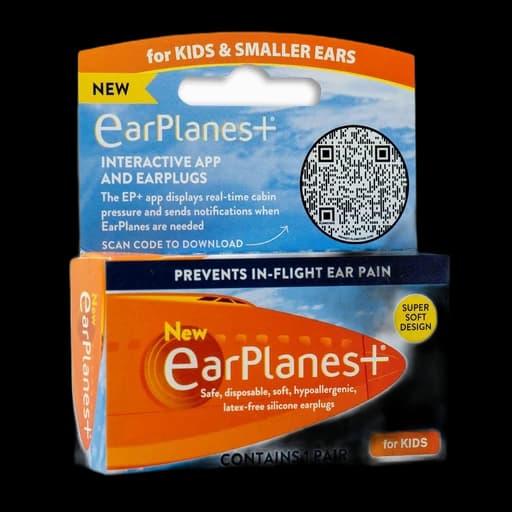
- Pressure-regulating ear plugs are the backup, not the plan. For a child old enough to keep them in and still hurting on every descent, children's EarPlanes slow the pressure change while they swallow. They are single-use, about $9 a pair, and no substitute for the swallowing routine above.
What most parents get wrong: the decongestant reflex
The instinct when a kid's ears hurt is to reach for a children's decongestant or cold medicine before the flight. For young children, that's the wrong move. Over-the-counter cough-and-cold and decongestant products aren't recommended for young children, and the evidence that they prevent ear pain in little kids is thin to nonexistent. If your child takes a medicine that contains an antihistamine or decongestant, the right step is to ask your pediatrician whether to use it for the flight, not to dose on your own.
For pain that's already there, infant or children's pain relievers (acetaminophen or ibuprofen, dosed by weight) are a reasonable backup if your child has a cold or ear infection, but check with your doctor first. The thing that prevents the pain in the first place is still swallowing, not a pill.
Flying with an active ear infection? Talk to your doctor first. With a current infection, a flight can mean increased pain and, in rare cases, a ruptured eardrum, so your doctor may recommend delaying the trip until it clears. Same caution if your child has had recent ear surgery.
When to call a doctor
Most airplane ear is uncomfortable but resolves on its own within minutes to a few hours after landing. Call your pediatrician if the ear pain lasts more than a few hours after the flight, if there's drainage or bleeding from the ear, persistent hearing loss, severe spinning dizziness, or a fever that suggests an infection. Those are signs to get it looked at rather than wait it out.
The honest bottom line
You can't control the cabin, and there's no device that reliably fixes this. What you can control is keeping your child swallowing during the climb and especially the descent, keeping them awake when the plane comes down, and not flying with an untreated ear infection if you can help it. Do those three things and most flights pass without the dreaded ear meltdown. For the rest of the trip, our guides to flying with a toddler, surviving long flights with kids, and packing for a baby's first flight cover everything else. Different problem after you land? See handling jet lag with a toddler.
Sources
- Mayo Clinic — Airplane ear: Symptoms & causes (mechanism: eustachian tube can't react fast enough to rapid pressure change on climb/descent; swallowing or yawning opens it)
- Nemours KidsHealth — Flying and Your Child's Ears (narrow tubes worse with cold/ear infection/adenoids; bottle or pacifier for babies, gum/hard candy only over 3, stay awake for descent, delay flying with an ear infection, ask the doctor about antihistamines/decongestants)
- HealthyChildren.org (American Academy of Pediatrics) — Flying with Baby (breast/bottle/pacifier during takeoff and landing eases discomfort; pain relievers for a cold or ear infection, following dosage carefully)