The short answer
The single most important thing you can do at the beach is decide who is watching the water — and make it the only thing that person does. Drowning is the leading cause of death for children ages 1 to 4, and it almost never looks like the splashing and screaming you'd expect. It is fast and silent. The U.S. Coast Guard, CDC, and lifeguards all describe the same pattern: a child slips under within seconds, with no noise, while adults are nearby but distracted.
Everything else in this guide — rip currents, life jackets, where to swim — sits on top of that one rule. A beach day with kids is not a "relax and zone out" situation. It's an active job, and it's worth knowing how to do it well so the rest of the trip is genuinely fun.
Key takeaways
- Assign a "water watcher." One adult, no phone, no book, no drink — their only job is eyes on the kids. Hand off the role explicitly when you swap.
- Swim near a lifeguard, between the flags. A guarded beach is the biggest safety upgrade you can make, full stop.
- Touch supervision for little ones. The AAP recommends staying within arm's reach of toddlers and weak swimmers, in the water and at the edge.
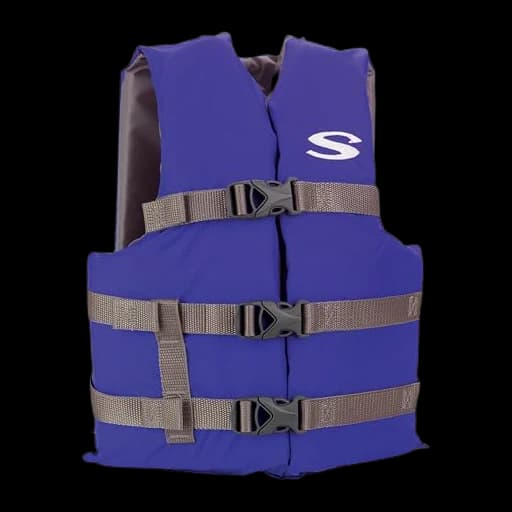
- Coast Guard life jackets, not floaties. Water wings and inflatable rings are toys, not safety devices — they can slip off or deflate. A vest counts only if its label shows U.S. Coast Guard approval.
- Learn the rip-current escape before you go: relax, float, swim parallel to shore, then angle in. Don't fight it.
The thing most parents get wrong
The biggest misconception is that drowning is loud. It isn't. A drowning child usually can't wave, splash, or call out — their body is using everything it has just to keep the mouth above water, often for less than a minute. That's why "I was right there" is the most common thing parents say afterward. Being nearby is not the same as watching.
The second misconception is that floaties make a child safe. They don't. The CDC is explicit: do not rely on air-filled or foam toys, because they are not safety devices. Any flotation, even an approved vest, can lull both the child and the adult into a false sense of security. If you want flotation, use a properly fitted U.S. Coast Guard-approved life jacket, and keep watching anyway.
Build your beach safety in layers
No single precaution is enough on its own. Safety comes from stacking several so that if one fails, another catches the gap. Here's the practical stack for a family beach day.
| Layer | What it looks like in practice |
|---|---|
| Choose a guarded beach | Swim where lifeguards are on duty and stay between the colored flags. Ask the guard about the day's conditions when you arrive. |
| Assign a water watcher | One sober, undistracted adult per shift. Pass a physical token (a lanyard, a hat) so it's always clear who's "on." |
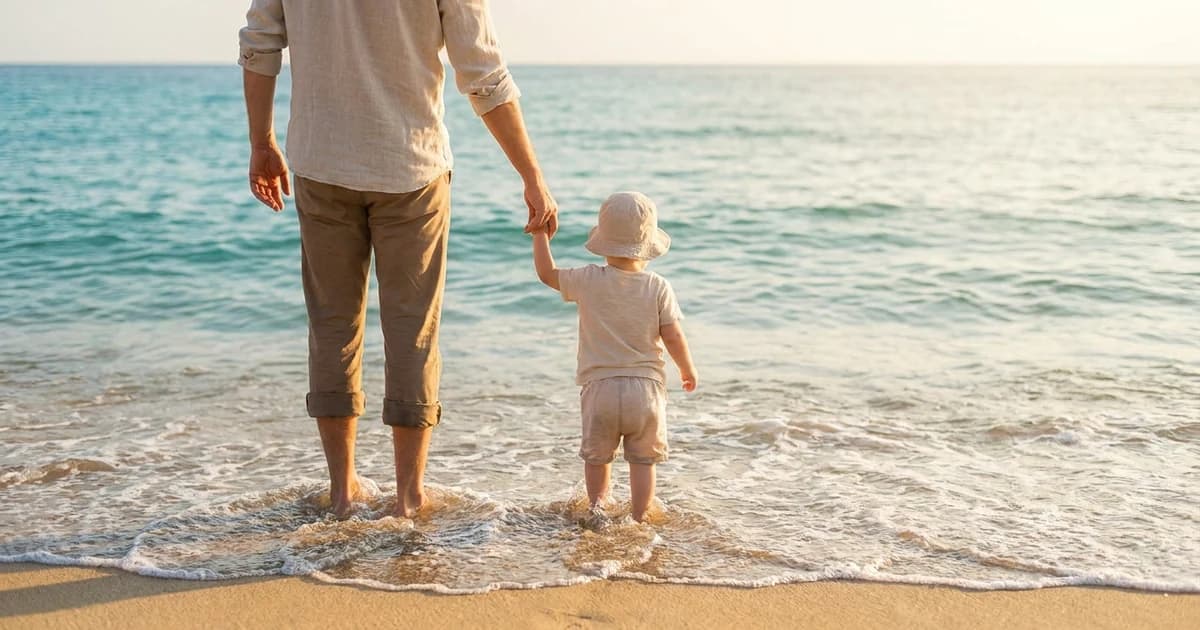
| Touch supervision for under-5s | Stay within arm's reach of toddlers and non-swimmers, even in ankle-deep water where a wave can knock them down. |
| Correct flotation | Coast Guard-approved life jacket for weak swimmers in open water. Never floaties as a substitute for watching. |
| Know the escape | Every adult in the group should know how to break the grip of a rip current. |
| Learn CPR | Your skills bridge the minutes before paramedics arrive. A short online course is enough to start. |
How to actually watch the water
"Watch the kids" is too vague to work. Make it a defined role:
- One adult is the water watcher — and that's all they do. No scrolling, no reading, no setting up lunch, no conversation that pulls their eyes away. The CDC specifically warns against phones, alcohol, and other distractions, because a child can slip under in the time it takes to read a text.
- Hand off out loud. "You've got the water now" — then wait for "Got it." Most lapses happen in the gray zone when each adult assumes the other is watching.
- Rotate before you're tired. Vigilance fades after about 15–20 minutes in sun and noise. Short shifts keep eyes sharp.
- Count heads on a timer. With multiple kids or a group, do a quick visual headcount every few minutes. In a crowd, kids drift.
Rip currents: the one ocean skill to teach the whole family
Rip currents are narrow channels of water flowing away from shore, and they're responsible for most surf-zone rescues and drownings. The dangerous instinct is to swim straight back toward the beach — straight against the current — until you're exhausted. A rip won't pull you under; it pulls you out. Here's the NOAA/National Weather Service "Break the Grip of the Rip" sequence, simple enough to teach a older child:
- Relax and float. Don't panic and don't fight the water. Floating conserves the energy that panic burns.
- Don't swim against the current. You won't win, and exhaustion is the real danger.
- Swim parallel to the shore to get out of the narrow current, then angle back in toward the beach following the breaking waves.
- If you can't escape, keep floating and wave or yell for help. Signal a lifeguard and let them come to you.
Two facts worth burning into memory: rip currents often form on calm, sunny days when the water looks inviting, and if someone else is caught, do not swim out after them — throw something that floats and get a lifeguard or call 911. Many of the people who drown in rips are would-be rescuers.
Bath, pool, and the boring hazards that actually get kids
It's not only the ocean. For the youngest travelers, the bigger risk is closer to your room. The AAP notes most in-home child drownings happen in bathtubs, and recommends children not bathe alone until they're at least 6. At a rental or resort, also watch for unfenced or partially fenced pools, hot tubs, and decorative water features. A pool that isn't fenced on all four sides is the single biggest residential drowning hazard for young kids. If your lodging has open water access, scout it the moment you arrive and decide how you'll manage it — this is one reason the lodging type you pick matters for families.
A simple pre-beach checklist
- ☐ Picked a lifeguarded beach and checked the day's flag/condition warnings
- ☐ Decided who is the first water watcher (and the handoff token)
- ☐ Coast Guard life jackets packed for weak swimmers — fitted and snug
- ☐ Reef-safe sunscreen and shade, so no one has to leave the kids to escape the sun (for the shade layer, our baby beach tents guide explains what a UPF 50+ claim actually means)
- ☐ Everyone over ~7 knows the rip-current escape
- ☐ Phone charged and 911 plus the nearest lifeguard station noted
- ☐ Scouted the pool/hot tub/water features at your lodging
Where this matters most
Beach safety isn't a reason to skip the ocean — it's what makes a coastal trip relaxing instead of nerve-wracking. The destinations families love most are exactly the ones where these habits pay off. If you're weighing options, our guides to the best beach destinations for toddlers and the best family beach vacations for 2026 flag which beaches are calm and which have surf, and our family trip finder quiz matches destinations to your kids' ages, budget and flight time. For specific spots, see our destination guides to Maui, Hawaii, the Big Island of Hawaii, and Panama City Beach, Florida. And if you're traveling with the littlest swimmers, pair this with our first-time tips for traveling with a baby and what to bring on our family vacation packing guide.
Sources
- CDC — Preventing Drowning — drowning as leading cause of death for ages 1–4, supervision, life jackets vs. toys, fencing, CPR.
- AAP HealthyChildren — Drowning Prevention for Toddlers — touch supervision, water watcher, bathing alone, avoiding floaties.
- NOAA National Weather Service — Rip Current Safety — Break the Grip of the Rip escape steps and rescue guidance.
- NWS Weather-Ready Nation — Rip Currents — calm-day rip formation, swim near a lifeguard, parallel-to-shore escape.