The quick version
Compression packing cubes are worth it for families — but not for the reason the ads promise. They do not magically create extra space. Their real job is turning one shared, chaotic suitcase into a sorted, per-person system so bedtime doesn't start with digging for pajamas. The trade-off nobody mentions: squeezing more clothes into the same volume makes your bag heavier, and for a family juggling airline weight limits that is the actual risk. This is a researched guide built from travel-gear testing and long-haul family packing, not a lab test we ran ourselves.
Key takeaways
- Cubes organize; they don't shrink your load. The most space-efficient method is tightly rolling clothes into even "sausages" and stuffing the bag — cubes save space only versus loose folded piles, which is how most families pack anyway.
- Compression trades volume for weight. You can fit more, so the bag gets heavier — the easiest way to accidentally blow past a carry-on weight limit.
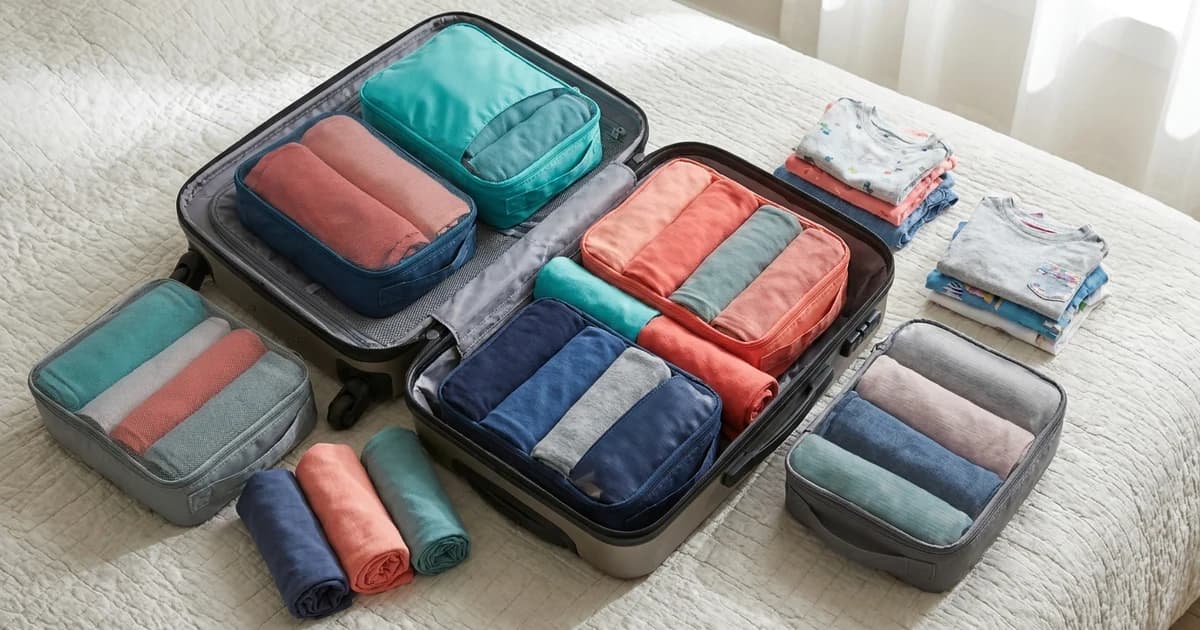
- One color per person is the whole trick. Assign each family member a cube color and the shared-suitcase scramble disappears.
- Compression cubes only help with thin fabrics. For t-shirts, leggings and pajamas they buy you a little room; for bulky sweaters and coats they mostly just zip harder.
Compression cube vs regular cube vs compression bag
Three similar-sounding products, three different jobs. Pick by what your family actually struggles with.
| Regular cube | Compression cube | Compression bag | |
|---|---|---|---|
| How it works | One zipper; holds shape | Second zipper flattens the load | Roll or vacuum the air out |
| Best at | Sorting & finding things | Sorting + a little extra room | Maximum squeeze |
| Space saved | Vs. loose piles only | Some, on thin fabrics | The most |
| Daily use | Easy — grab and go | Easy | Annoying to open & re-seal |
| Family verdict | Fine for short trips | The everyday sweet spot | Save for the flight home with souvenirs |
For most families the compression cube is the middle ground: you get the per-person sorting of a regular cube plus a modest volume win, without the live-out-of-a-vacuum-bag hassle.
The myth worth busting: cubes don't create space
Here's the line that survives every honest test: packing cubes do not save space in absolute terms. If your only goal is cramming every cubic inch, tightly rolled clothes stuffed straight into the bag beat any cube. Compression cubes help "somewhat with thinner fabrics"; regular cubes "mostly just organize." So why use them? Because nobody actually packs by hand-rolling every sock to the same size on a Tuesday night with two kids underfoot. Against the real-world alternative — loose folded piles — cubes win on order, findability and staying packed.
The weight trap: compression lets you fit more, and more clothing weighs more. It is genuinely easy to build a beautifully organized carry-on that quietly tips over the 22 lb / 10 kg limit many airlines enforce. Weigh the bag after you compress, not before — a $12 luggage scale saves a gate-side repack with three tired kids watching.
The one-color-per-person system
This is the single upgrade that makes cubes worth it for a family. Give every person their own cube color: blue for one kid, green for the other, a neutral for each parent. Now the suitcase is really four small drawers, and nobody empties a shared bag onto a hotel bed at 9 pm hunting for one swimsuit. A few rules that hold up on the road:
- One cube per kid, packed by them when old enough. Ownership cuts the "where's my hoodie" refrain.
- A dedicated dirty-laundry cube. Otherwise sweaty socks slowly contaminate the whole bag over a week. A neutral color everyone recognizes as off-limits works best.
- Outfit-bundle for the little ones. Roll a full top-bottom-underwear set together so a caregiver can grab one bundle, not assemble an outfit.
Who needs which setup
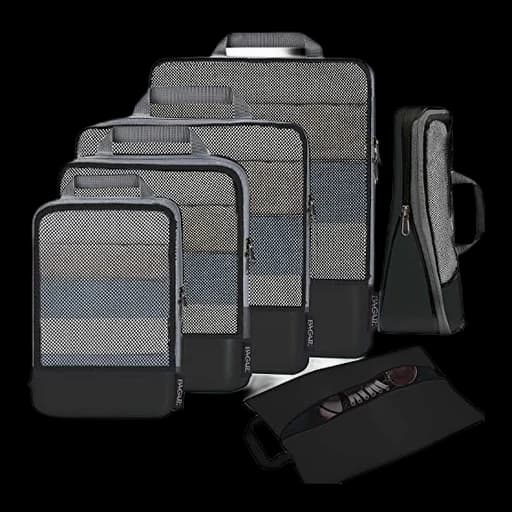
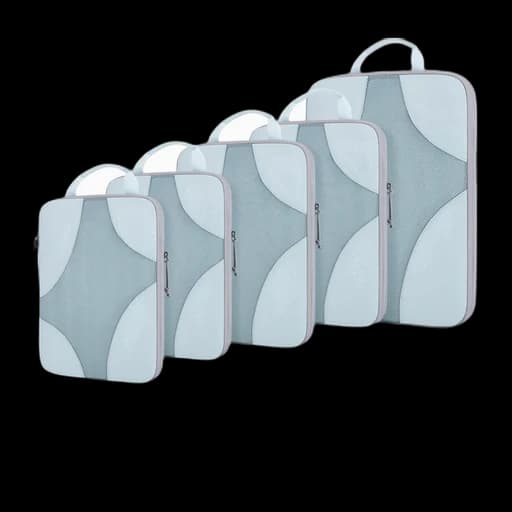
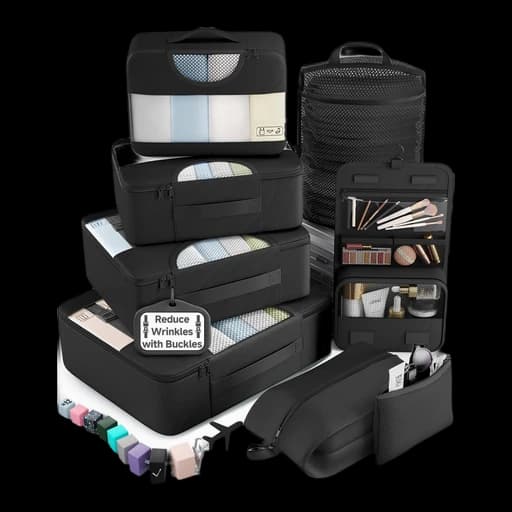
You don't need a matching 8-piece set. Match the kit to the trip and the ages — a six-cube compression set runs about $19, and a plain non-compression set costs less if sorting is all you need.
| Your family / trip | Suggested setup |
|---|---|
| Weekend or one-bag trip | Regular cubes, one color each — skip compression, you won't fill it |
| Week-plus, checked bags | Compression cubes per person + one dirty-laundry cube |
| Baby / toddler in tow | Outfit-bundle cubes + a separate cube for diapers, wipes and a spare set |
| Tweens / teens who pack themselves | One compression cube each; let them own the Tetris |
| Cold-weather or bulky gear | Compression bags for coats/sweaters, regular cubes for everything else |
| Coming home over-bought | A compression bag saved for the return flight |
How to actually pack a cube
Cubes work with both rolling and folding, so use whichever your family already does. Rolling fits marginally more and resists creases on soft fabrics; flat-folding is faster and better for anything that wrinkles hard. Fill each cube to firm-but-not-bulging — overstuffed cubes bulge in the middle, refuse to sit flat, and stop being the tidy blocks that make the system work. Then slot the cubes in like luggage Tetris, heaviest low and toward the wheels. Commit fully: one or two cubes floating in an otherwise loose suitcase somehow makes the whole thing feel messier, not neater.
Related reading
- How to Pack for a Family Vacation (Without Overpacking) — the wider system cubes plug into.
- The Ultimate Family Vacation Packing List (Printable) — decide what goes in the cubes first.
- What to Pack for Baby's First Flight — for the outfit-bundle and diaper-cube crowd.
- What Shoes to Pack for a Family Trip — the other overpacking culprit.
Sources
- Pack Hacker — Best Compression Packing Cubes, tested (compression mechanisms, thin-fabric limits, shape retention).
- A Little Adrift — Are Packing Cubes Worth It? (cubes don't create space, the weight trap, the color-per-person and dirty-laundry systems).