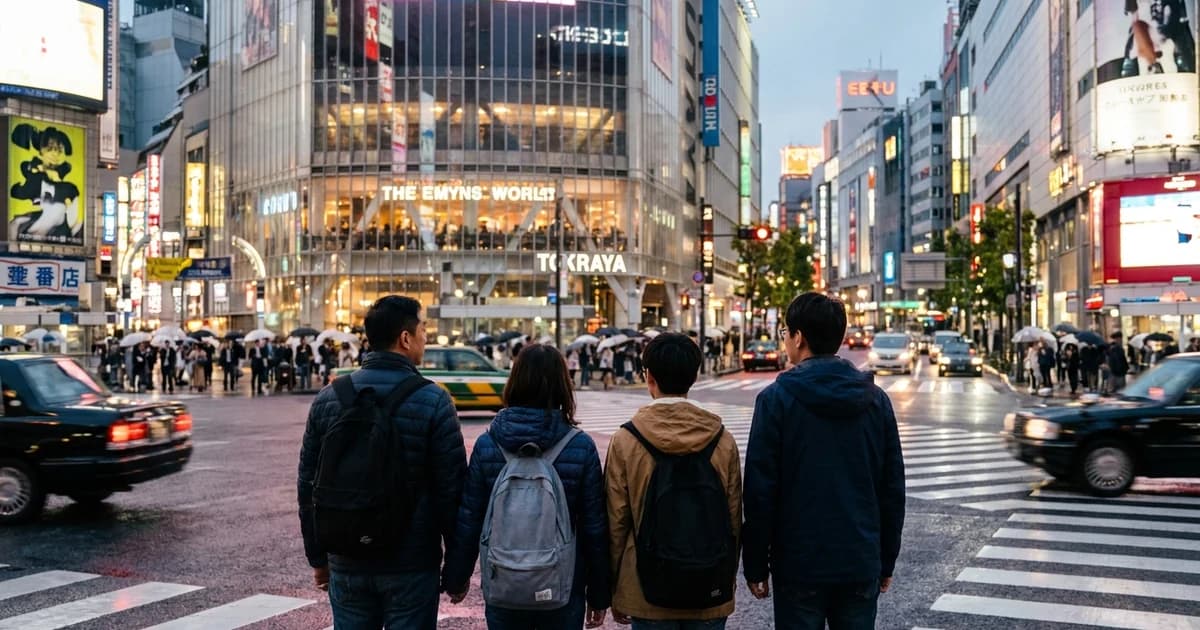
Things to Do in Tokyo With Teenagers: Build the Trip Around Independence
A five-day Tokyo trip with teenagers works when you stop treating it like a tour and start treating it like a city you hand them. Tokyo is genuinely one of the safest big cities on earth, the trains are intuitive, and the things teens already care about — fashion, food, gaming, anime, music — are everywhere. The trip fails the same way every parent trip fails: too many anchors a day, no buy-in, and a jet-lagged kid asleep through the morning you scheduled the temple.
Here is the framework: cap each day at two anchors, give every teen one IC card and the freedom to ride the trains, and plan the jet lag instead of fighting it. Our full 5-Day Tokyo Itinerary for Teens lays out the day-by-day version; this is the planning logic underneath it.
Things to do in Tokyo with teenagers at a glance
- Shibuya and Harajuku — street style, thrifting and the crossing itself. The default "theirs" anchor.
- Akihabara — gaming, anime and arcades; the neighborhood most teens will ask for by name.
- A teamLab digital-art space — the kind of room that ends up on their feed.
- Senso-ji at 7am — the temple is genuinely worth it before the crowds arrive.
- An early fish-market breakfast — save it for day 3, once everyone's clock has caught up.
- A rooftop city view at night — the low-effort anchor that closes a big day.
Key Takeaways
- Two anchors a day, max. Tokyo neighborhoods are dense — Shibuya alone can eat an afternoon. Over-planning is the single most common Tokyo-with-teens mistake.
- Give each teen an IC card. Suica or PASMO turns the train into a tap-and-go and unlocks independent free time without anyone touching a ticket machine.
- Plan the jet lag. Flying to Japan from the US is eastward across more than three time zones — the hard direction. Shift bedtime earlier before you go and use light strategically on arrival.
- Let the teen co-author. Hand them one of the two daily anchors to choose. Buy-in is the difference between engaged and sullen.
- Cherry-blossom season is gorgeous but crowded. Late March to early April means premium hotels and big crowds; October–November is the calmer alternative.
What Most People Get Wrong: They Plan the Trip They Wanted at 14
The classic failure is a parent building a museum-and-temple march and assuming a teenager will love the version of Tokyo the parent romanticized. Teens engage with Tokyo through their own doors: Harajuku and Shibuya for style, Akihabara for gaming and anime, a teamLab digital-art space for the kind of room that ends up on their feed, and food they get to point at and order themselves. The fix is not fewer cultural moments — Senso-ji at 7am before the crowds is genuinely worth it — it is letting the teen own half the plan so the temple feels like a fair trade, not a hostage situation.
Pair one "yours" anchor with one "theirs" anchor each day. Morning temple, afternoon Akihabara. Morning fish market, afternoon Shibuya. The structure does the diplomacy for you.
The Transit System Is Your Best Babysitter
Tokyo's network is run by several companies across overground trains, subways, buses and monorails — but a single rechargeable IC card pays for almost all of them, so you never decode which line belongs to whom.
| Card | Who it's for | Notes |
|---|---|---|
| Suica / PASMO | Anyone, any age | Prepaid, rechargeable with cash, sold from 1,000–10,000 yen including a 500-yen deposit. Works on trains, subways and buses across the metro area and much of Japan. |
| Welcome Suica | Short-term visitors | No deposit, but valid for 28 days only — perfect for a one-week trip. Otherwise behaves like a normal Suica. |
| Mobile Suica / PASMO | Teens with phones | Add the card to a smartphone and top up in-app, no ticket office needed. |
Give each teen their own card with a set balance and a meeting time. A 14-year-old who can get themselves from Shinjuku to Harajuku and back has a completely different trip from one trailing a parent. Children aged 11–15 pay child-rate fares, so a teen's card is cheaper to top up than an adult's. Set one rule: if the balance runs low, recharge at any machine before tapping in.
Plan the Jet Lag Like an Anchor, Not an Afterthought
Jet lag is a mismatch between your body clock and the new time zone, and it reliably hits anyone crossing more than three zones. Tokyo from the US is the eastward, harder-to-adjust direction. The CDC's advice is concrete and worth following with teens specifically, who will otherwise sleep through your first morning and be wired at 2am:
- Before you fly: because you're traveling east, go to bed an hour or two earlier than usual for a few nights to nudge your clock forward.
- On arrival: immediately follow the destination's sleep and wake schedule, and stay in well-lit areas during the day to reset.
- Naps: if a teen is fading, cap naps at 15–20 minutes so they still sleep that night.
- Buffer: arrive at least two days before anything you really care about, so the trip isn't built on a foggy first 48 hours.
Practically, that means making Day 1 a low-stakes neighborhood-and-food day, not the marquee event. Save the early-morning market or the big day trip for Day 3 once everyone's clock has caught up.
A Workable Five-Day Shape
This is the rhythm our Tokyo teen itinerary follows — two anchors a day, alternating "yours" and "theirs," with the heavy mornings pushed past the jet-lag window.
- Day 1 — Settle: easy neighborhood wander near your hotel, conbini snacks, an early dinner. Hand out the IC cards and do one practice train ride together.
- Day 2 — Old and new: Senso-ji early before crowds, then an afternoon the teen picks (Shibuya or Akihabara).
- Day 3 — The marquee: the early fish-market breakfast or a digital-art space now that everyone's adjusted; a rooftop city view at night.
- Day 4 — Their day: let the teen plan most of it within a budget — fashion districts, gaming arcades, themed cafes.
- Day 5 — Loose ends: a half-day anchor plus shopping and a relaxed last meal before the flight home.
Budget-wise, a family of four should plan somewhere in the range of $4,500–$9,000 all-in for five days depending heavily on hotel tier and flight timing — Tokyo itself is cheap to eat in (convenience stores and ramen shops) but flights and a family hotel room carry the cost.
Booking.com · Viator · we may earn a commission · Our Tokyo family guide
Safety and the One Legal Detail to Know
Tokyo's safety reputation is earned — lost phones and wallets genuinely get handed in to police boxes. The teen-specific thing to brief them on is legal context, not danger: Japan's legal drinking age is 20, not 18 as in parts of Europe, so don't assume the rules a well-traveled teen learned elsewhere apply. Some nightlife districts shift in character after about 10pm; family groups should be elsewhere by then. Convenience-store ATMs (7-Eleven and Japan Post are most reliable) take international cards, so a teen carrying a small cash buffer plus their IC card is well covered.
Once you've got the framework, the easiest next step is to read the day-by-day plan and check when to go: see the full 5-Day Tokyo Itinerary for Teens and the broader Tokyo destination guide for best months, where to stay, and getting in from the airport.