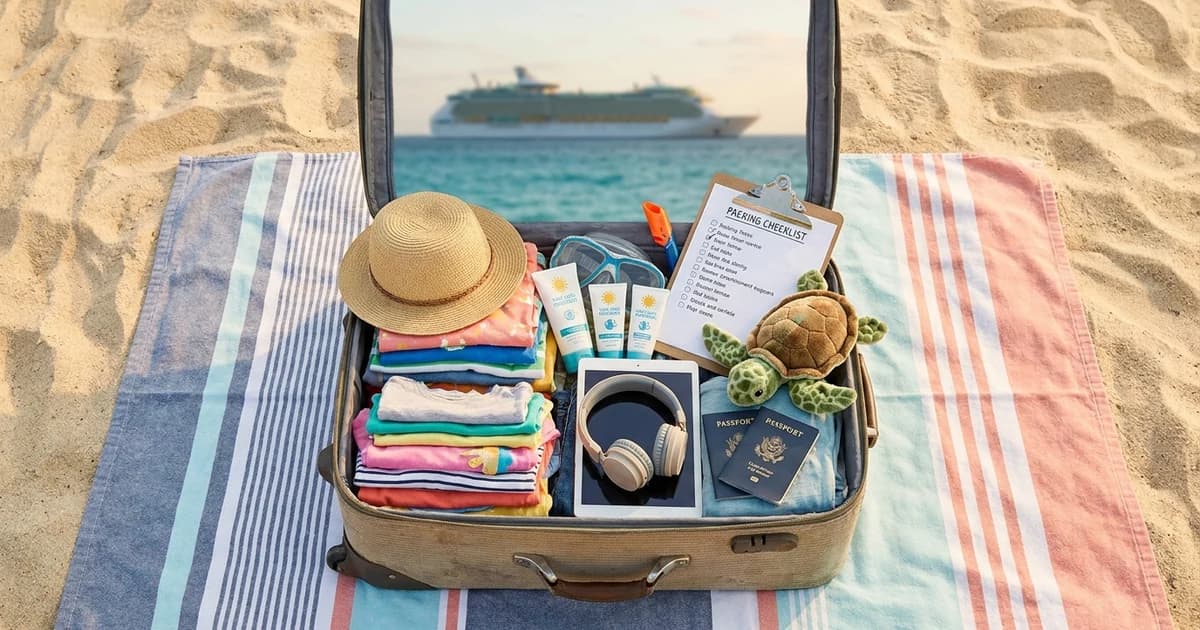
You booked your first family cruise. Now you're three weeks out, panicking about whether you should have picked an interior cabin, what your kid does on the muster drill, and whether the kids' club is going to be enough to give you one quiet dinner. This checklist walks through every reasonable first-cruise concern with honest tradeoffs, real numbers, and the three things first-timers always forget to pack.
Choose the Right Cabin (Interior vs. Oceanview vs. Balcony)
The cabin is your single biggest booking decision and the place first-timers most often overspend or underspend. Here's how to think about it with kids in tow.
Interior cabins
Standard interior cabins on most mainstream lines run 150-185 sq ft. No window. Pitch black when lights are out, which is genuinely great for kid naps and night sleep but disorienting on Day 1 — you'll think it's 4am and it'll be 9am. Roughly 30-40% cheaper than balcony for the same sailing. The honest verdict: interior works fine for a first 3-4 night cruise with kids, especially if you're treating the cabin purely as a place to sleep.
Oceanview cabins
Oceanview adds a fixed window, typically the same square footage as interior. Roughly 10-15% more than interior. The window itself doesn't change the cabin's function much, but the ability to gauge time of day matters more than first-timers expect. Often a sweet spot for first-time families.
Balcony cabins
Balcony cabins on most mainstream lines run 175-225 sq ft cabin plus a 35-50 sq ft private balcony. 40-60% more than interior. The balcony unlocks two real benefits with kids: (1) you can sit outside while kids nap inside, and (2) port-day mornings watching pull-in are genuinely magical. The downside: balcony railings are designed for adults, and you absolutely cannot leave a toddler unattended on a balcony — most lines explicitly state this in cabin paperwork.
Suites
Suites typically start around 280 sq ft and climb fast. Most mainstream-line suites add a real living area and meaningful bathroom. Consider only if you're traveling with three or more kids, multi-gen groups, or you've decided this is a special-occasion trip and the cabin is the destination.
Honest first-cruise advice: book the cheapest oceanview cabin on a 3-4 night sailing for your first cruise. You'll learn what you actually use the cabin for. Then book balcony for the second cruise once you know.
What to Pack (and the 3 Things First-Timers Always Forget)
Cruise packing differs from regular vacation packing in three ways: power outlets are limited (most cabins have 2-3 outlets total), cabins have very little storage, and you can't run out and buy something you forgot once you're at sea.
The 3 things first-timers always forget
- A power strip with USB ports (without surge protection). Most lines ban surge-protected strips for fire-code reasons but allow basic non-surge strips. Verify your line's policy before packing. With a family of four charging phones, tablets, cameras, and a smart watch, two outlets is brutal.
- Magnetic hooks. Cruise cabin walls are steel. Magnetic hooks let you hang wet swimsuits, hats, lanyards, and tote bags without using up the few real hooks. Pack 6-10.
- A lanyard with a clear card holder for each kid. Kids lose their key card constantly. A lanyard with the card visible solves it. Most lines sell these onboard for $7-12 each — buy them on Amazon for $2 each before you sail.
Standard family packing checklist
- Swimwear (2 per kid — one's always wet)
- Pool cover-ups and water shoes
- Sun hats and SPF 50+ sunscreen (cruise sundeck sunscreen runs $15-25/bottle)
- Light layers for cabin (cabins run cool, around 68-70°F)
- One "nice" outfit per person for main dining (most lines have one or two slightly-dressier nights)
- Refillable water bottles for port days
- Small backpack or tote per parent for port days
- Kids' Tylenol/Motrin and any prescription meds (ship medical center visits start around $80)
- Bandaids, hand sanitizer, anti-bacterial wipes
- Motion sickness remedies (covered below)
- Tablets/Kindles/headphones for cabin downtime
- A few small wrapped "surprise" toys for kids — pull one out per night, especially helpful at sea-day dinners
Register for the Kids' Club Early
Most lines open kids' club registration at boarding (Day 1 in the embarkation port). Register the moment you board — the line is short for the first 30 minutes and crushing by 2pm. You'll fill out an allergy form, photograph your child for ID, set a check-out password, and learn the club's hours. On Disney, Royal Caribbean, and Carnival, registration is also where you put your kid's name on the daily-activity wait lists for popular themed events.
Most kids' clubs require kids to be at least 3 years old AND fully potty trained. The exceptions: Disney's nursery accepts ages 6 months to 3 years (paid, around $9/hour, capacity-limited), and Carnival's Camp Ocean accepts age 2 in the Penguins room with no fee (rare in the industry).
Day 1: Boarding, Muster Drill, and Sailaway
Boarding day reality
Boarding usually starts around 11am-noon and runs until about 3-4pm. Earlier check-in time slots = earlier boarding = first-pick on dining reservations and spa reservations and kids' club registration. Always pick the earliest check-in slot your line offers.
Cabins typically aren't ready until about 1:30-2pm, but you can board, eat lunch at the buffet, and explore the ship while you wait. Pack a small "day bag" with swimsuits, sunscreen, and any prescription meds — your checked luggage may not arrive at your cabin until 5-7pm.
The muster drill (and why it stresses parents out)
The muster drill is a mandatory safety briefing required before sailaway. Most major lines have moved to an "e-muster" system: you watch a safety video on the in-cabin TV or app, then briefly check in at your assigned muster station. The whole thing takes 10-15 minutes per family. Old-style muster drills (everyone packed shoulder-to-shoulder for 30 minutes wearing life vests) are mostly gone on mainstream lines.
For toddlers, e-muster is a non-event — most kids handle it fine. Bring a lovey or pacifier, do the check-in fast, and you're done. Don't skip it: ships will not sail until every cabin has checked in.
Sailaway
Sailaway happens about 4-6pm on Day 1 from the top deck. Music, drinks, the slow scrape of leaving port. With kids, this is a great time to be on deck — they'll remember it years later. Don't book main dining at 5:30 on Day 1; you'll miss it.
Dining: Rotation vs. Freestyle vs. Fixed Time
Three dining systems, same broad goal: feed your family every night.
- Fixed-time main dining. Same dining room, same table, same servers, same time every night (typically 6pm or 8:15pm). Used by Royal Caribbean, Carnival, MSC, Princess, Holland America. Best for: families who want predictability and the same servers learning your kids' preferences.
- Rotational dining. Servers follow you to a different themed restaurant each night, dining time stays the same. Disney Cruise Line only. Best for: variety with continuity.
- Freestyle / Anytime dining. Show up to any main dining venue between roughly 5:30-9:30pm, get seated. Norwegian Cruise Line uses this entirely; other lines offer it as an alternative to fixed-time. Best for: families with little kids who want flexibility but worst for table-and-server continuity.
For a first cruise with kids, fixed-time main dining or rotational is genuinely easier than Freestyle — you walk in, your table is ready, and the routine itself is calming for kids who eat better with structure.
Port Day Strategy by Kid Age
With toddlers (under 3)
Pick maximum one structured activity per port day. A short snorkel beach day, a small-group beach excursion to a calm bay, or just walking off the ship in San Juan or Nassau and finding a park within 10 minutes of the pier. Toddlers nap on schedule or implode by 2pm — plan for that. Many families with toddlers stay on the ship on at least one port day for the empty pools and quiet decks.
With school-age kids (5-10)
One real excursion per port is the sweet spot. Beach day, dolphin encounter, ruins tour, snorkel boat. Avoid full-day bus tours — a 7-hour bus excursion will crush a 6-year-old. Book excursions through the cruise line for first-timer peace of mind (the ship will wait if a cruise-line excursion runs late; it will not wait for an independent excursion).
With tweens and teens (11+)
You can do real adventures: zip lining, ATV tours, deeper snorkel reefs, ruins half-days. Older kids can also be left on the ship if it's docked at a private island or familiar port — most lines allow ages 10+ to sign themselves out of kids' club to roam the ship.
Motion Sickness for Kids by Age
Modern cruise ships are stable. You'll feel motion in two situations: actual rough weather (1-2 days per Caribbean cruise on average), and cabins at the front (forward) or back (aft) of the ship on high decks. Midship low-deck cabins barely move.
Under 2
Talk to your pediatrician before sailing. Most pediatric motion-sickness meds aren't approved for under-2.
Ages 2-6
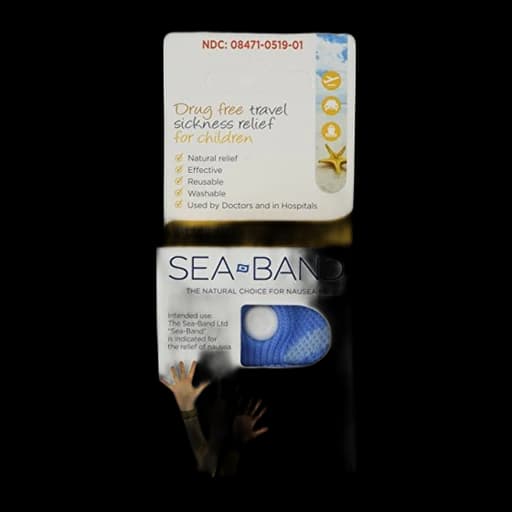
Children's Dramamine (chewable, 12.5mg dimenhydrinate per chew) is the standard, dosed by weight. Read the label. Sea-Bands (acupressure wristbands) are drug-free and worth packing as a backup.
Ages 6+
Children's Dramamine works through about age 12. Above 12, adult Bonine (less drowsy than Dramamine) often works better.
For everyone
If a kid feels nauseous, get them on deck looking at the horizon, away from screens, with a small piece of dry bread or saltines. Ginger candy and ginger ale also help. The ship's medical center has stronger meds available.
What's Truly Free vs. What Costs Extra
Included in your fare on essentially every line
- All meals at main dining, the buffet, and most casual venues
- Most theater shows, deck parties, and trivia
- Pool access, water slides, and most outdoor activities
- Kids' club for ages 3-17 (Disney's under-3 nursery is the exception)
- Room service breakfast on most lines (Royal began charging for some room service items recently — verify)
- Coffee, tea, lemonade, iced tea, juice at meals (specialty coffee and bottled water cost extra)
Always extra-charge
- Alcohol and soda packages (drinks individually $7-13)
- Specialty restaurants ($25-65 per person cover charges typical)
- Spa, hair salon, gym classes (basic gym access is free)
- Photo packages
- Shore excursions
- Casino
- Kids' nursery for under-3 (Disney's, paid)
- Some headline private-island activities (Royal's CocoCay Thrill Waterpark, etc.)
Gratuities Reality
Gratuities are the line item first-timers most often miss in their cruise math. Each major line auto-adds gratuities to your shipboard account at the following daily rates per person (including kids):
- Disney: about $16-18.50/person/day depending on cabin tier
- Royal Caribbean: about $18.50-21.50/person/day
- Carnival: about $16/person/day
- Norwegian: about $20-25/person/day
- MSC: about $14.50-16.50/person/day
- Princess: about $17-19/person/day
- Holland America: about $17-19/person/day
For a family of four on a 7-night sailing, gratuities alone add roughly $450-700 to your bill. You can adjust gratuities at guest services, but the staff who serve you (kids' club counselors, dining servers, cabin stewards) depend on this for the bulk of their income. Plan for it as a real cost.
The Day Before You Disembark
Last-day logistics that catch first-timers: pack everything except what you're wearing and your day-of-disembarkation outfit by 9pm. Put your luggage outside your cabin door before bed (the line collects overnight). Settle your shipboard account at guest services if you used cash. Disembarkation usually starts around 7am with self-disembark groups; standard luggage-claim disembark runs 8-10am. Eat one last buffet breakfast — most other dining is closed.
The Honest Bottom Line
A first family cruise has a learning curve. The cabin will feel small, Day 1 will feel chaotic, and you'll miscalculate at least one thing — gratuities, sunscreen costs, or specialty dining math. By Day 3 you'll have the rhythm. By the last night you'll be researching your second cruise. Almost every first-time cruise family reports the same thing: it was easier than they expected, and they'd absolutely do it again.