Long-Haul Flights with Kids Are Survivable
A six-hour-plus flight with children is a different beast than a quick domestic hop. The stakes are higher, the restlessness is more intense, and the confined space feels smaller with every passing hour. But families fly long-haul routes every single day, and most of them arrive intact. The difference between a miserable experience and a manageable one comes down to preparation and strategy. These twelve approaches are drawn from real families who regularly fly internationally with young children.
1. Master Seat Selection
On long-haul flights, seat choice matters enormously. Bulkhead rows offer extra legroom and bassinet attachment points for babies under 20 pounds. Request these seats when booking, not at the gate. For toddlers and older kids, window seats provide entertainment and a wall to lean against for sleeping. Avoid the last row near lavatories since the noise, smell, and foot traffic make sleep nearly impossible. If flying with two parents and one child, book the window and aisle in a three-seat row. The middle seat often stays empty, and if someone does claim it, they will gladly swap for your aisle or window.
2. Entertainment Rotation Every 30 Minutes
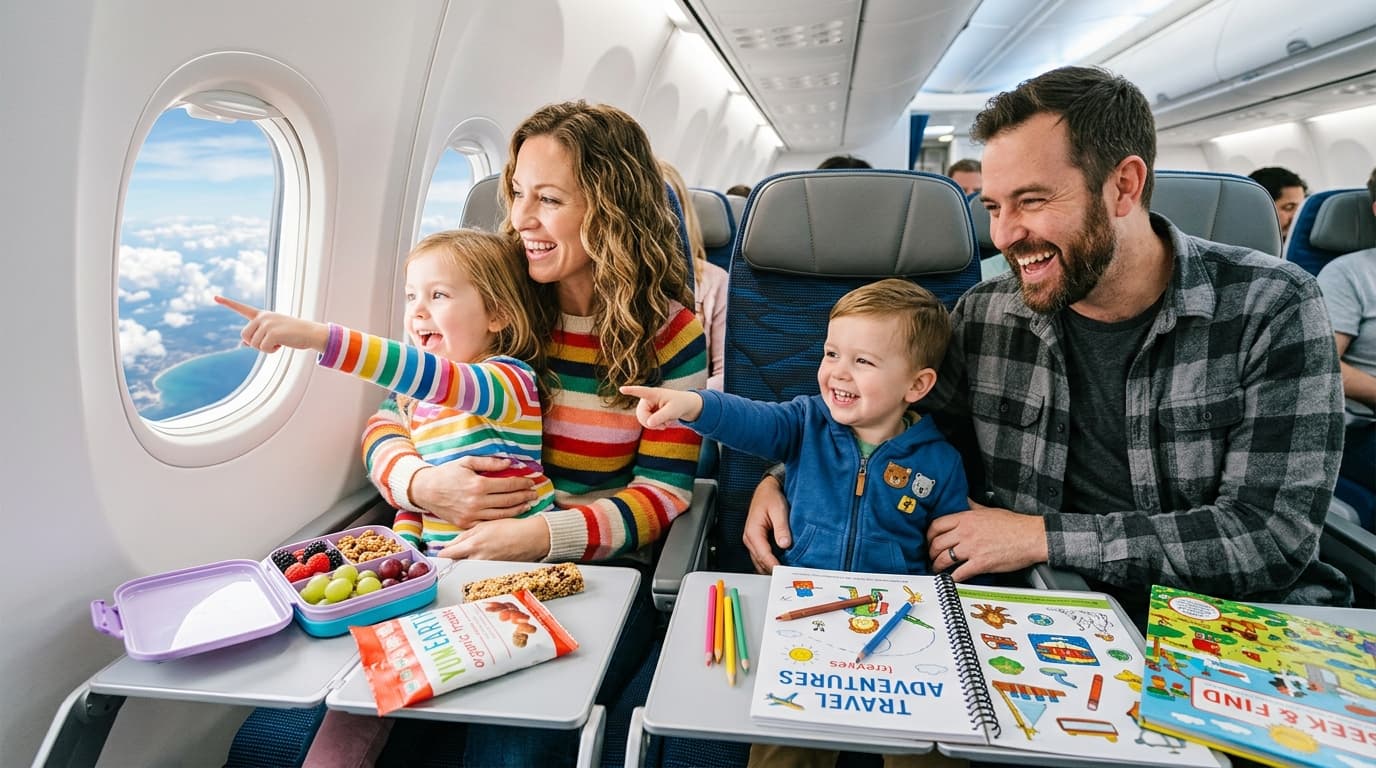
The single biggest mistake parents make on long flights is pulling out the tablet immediately. Instead, create an entertainment rotation. Start with looking out the window, then a sticker book, then a snack, then coloring, then a show. Rotate activities every 20 to 30 minutes to prevent boredom from setting in. Pack 8 to 10 small activities and reveal them one at a time. The novelty factor of something new keeps kids engaged far longer than one device running for hours. For more on in-flight entertainment, see our toddler flight tips guide.
3. Build a Snack Packing System
Pack snacks in individual portions organized in a clear zip-lock system. Create three tiers: everyday snacks like crackers and fruit pouches for the first few hours, favorite snacks like goldfish and granola bars for mid-flight, and special treats like gummy bears or chocolate for emergencies. Plan roughly two to three snacks per hour of flight time. Avoid anything excessively crumbly or sticky. Squeezable fruit pouches are excellent because they are mess-free and help with ear pressure during descent.
4. Overnight vs. Daytime Flights
For flights over eight hours, overnight departures are generally better for families. Children tend to sleep for a significant portion of the flight, following their normal bedtime routine. Bring pajamas and a small blanket to signal sleep time. Daytime flights work better for shorter long-haul routes of six to eight hours where you want kids alert on arrival. Consider your destination's time zone when choosing: arriving in the morning local time helps everyone adjust faster.
5. Request Bassinets Early
Airlines offer bassinets on international flights for babies under approximately 20 pounds and 26 inches, though limits vary by carrier. These attach to the bulkhead wall and free your arms for hours. Request a bassinet when booking your ticket, confirm 48 hours before departure, and remind the crew at boarding. Supply is limited and they are assigned first-come, first-served. Even if your baby has outgrown it, the bulkhead legroom alone is worth requesting these seats.
6. Fight Jet Lag with a Pre-Trip Schedule Shift
Three days before departure, start shifting your child's bedtime by 30 minutes per day toward the destination time zone. This does not eliminate jet lag but takes the edge off. On arrival, get outside in natural sunlight immediately, especially in the morning. Maintain meal times on the new schedule even if no one feels hungry. Most children under five adjust within two to three days with this approach. For a complete jet lag strategy, see our jet lag guide.
7. Know Your Airline's Family Perks
Many airlines offer family-specific benefits that parents overlook. Emirates provides free toy packs and kids meals. Singapore Airlines has in-seat entertainment systems with extensive children's libraries. Qantas offers family pre-boarding and complimentary kids activity packs. Japan Airlines gives out cardboard airplane toys. Research your specific airline's family amenities before you fly and request them at check-in if they are not automatically provided.
8. In-Flight Sleep Strategies
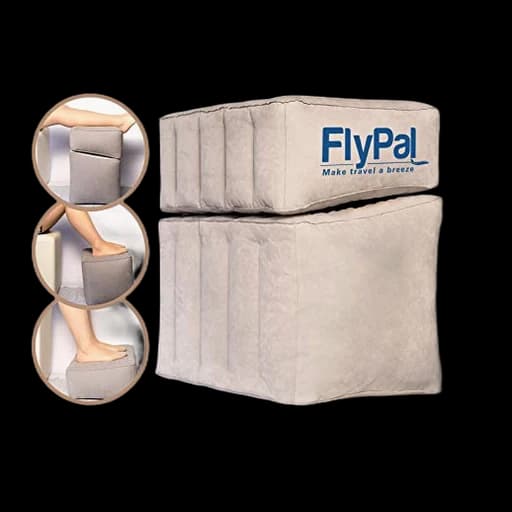
Create a sleep environment within your seat area. A lightweight blanket from home carries familiar scent cues. Dim the overhead light and close the window shade. Kid-sized noise-canceling headphones playing white noise or a familiar audiobook help block cabin noise. Inflatable footrest pillows turn economy seats into a flat surface for small children. Dress kids in comfortable layers since cabin temperatures fluctuate. For toddlers in their own seat, an FAA-approved car seat provides a familiar sleeping space.
9. Handle Turbulence Anxiety
Children pick up on parental anxiety, so your calm response matters most. Explain turbulence in simple terms: the airplane is driving over bumpy air, just like a car on a bumpy road. Have a comfort item within reach, not in the overhead bin. Practice deep breathing together as a game before the flight so it feels natural when turbulence hits. Distraction works better than explanation for kids under four, so have a favorite show or toy queued up for bumpy patches.
10. Consider Airport Lounge Access
Airport lounges transform long layovers from ordeals into rest stops. Many lounges have quieter spaces, better food options, and sometimes children's play areas. Priority Pass offers lounge access for around $429 per year, and many premium credit cards include membership. For a single long-haul trip, a day pass at $50 to $75 can be worth every penny when you need a calm space for feeding, napping, or simply escaping the terminal chaos.
11. Plan Layovers Strategically
If your route requires a connection, choose a layover of at least two and a half hours to avoid rushing, but no more than four hours to limit total transit time. Some airports offer exceptional family facilities: Singapore Changi has a butterfly garden, Munich has a playground, and Amsterdam Schiphol has a kids zone. Research your connection airport's family amenities in advance. Avoid minimum connection times at all costs since a missed connection with tired children is a nightmare scenario.
12. Pack a Change of Clothes for Everyone
This is non-negotiable for long-haul flights. Pack a complete change of clothes for each child and at least a spare shirt for each parent in your carry-on. Spills, motion sickness, and diaper failures are significantly more likely on long flights due to turbulence, unfamiliar foods, and disrupted schedules. A zip-lock bag for soiled clothes keeps your carry-on fresh. Dress everyone in comfortable, layered clothing that is easy to change in a cramped lavatory.